Forest County
Chapter XIV
KINGSLEY TOWNSHIP
STREAMS â POPULATION – OFFICERS ELECTED IN FEBRUARY, 1890 – THE HISTORY
OF THE TOWNSHIP – LUMBER COMPANIES AND MILLS – VILLAGES, POST-OFFICE,
INCIDENTS, ETC.KINGSLEY TOWNSHIP may be credited as the birthplace of the classic
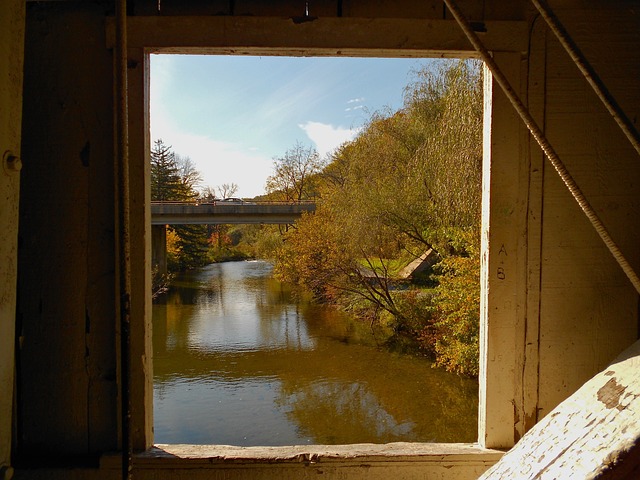
Tionesta. This river enters the township at the northeast corner, and flows
southwest in a tortuous channel to the line of Green township, where it runs
south to Nebraska village. Within this township it receives eleven creeks
flowing south from the Allegheny divide, and three from the Big Level,
including Salmon creek. Each of the fourteen creeks has several feeders, so
that with the exception of the southeast plateau, Kingsley is well carved up
into hill and valley.The population of the township in 1880 was 460. In 1888 there were 83
Republican, 56 Democratic and 5 Prohibitionist votes recorded, tota1144,
indicating about 720 inhabitants.The officers for 1890 are as follows: Judge, J. E. Berlin; inspectors, John
Weller, John Berlin; treasurer, Eli Berlin; clerk, W. F. Jones; school
directors; John Osgood, H. A. Zuendel; overseer of poor, Conrad Burhen;
auditor, Levi Pierson; constable and collector, W. A. Kribbs; justice of
peace, William Richards.This township is named in honor of one of its pioneers, of whom everything
is written in the general chapter. In fact the history of this township
belongs to the general history, owing to the character of the pioneers and
early industries, which were as well known at the mouth of the Tionesta as
among the pine forests up that creek.Hall and May and the Wheelers were the leading lumbermen in Tionesta county
in 1867. There were mills at Buck Mills, Newtown, Balltown and other unnamed
spots in the valley. In 1870-71 Cobb’s mills, four miles above Lacy
town, and his mill on Tom’s run gave employment to sixty-eight teams and 120
men. In March, 1867, the Pittsburgh & Forest Lumber Company bought
the timber land of F. A. Howe & Co., on Tionesta creek. Dithridge was
president of this company, T. A. Wright, secretary; L. L. Hackett,
superintendent at Tionesta, and Edward Davison, at Pittsburgh. This steam
saw-mill was erected on Lamentation creek. The Crawford saw-mill,
erected in 1884, on the Tionesta, near Henry’s mills, was destroyed in March,
1887 ..In 1858, when Percival & Leavens entered business at Newtown, for Stowe
& Co., they found the old mill changed into a gang-mill; DeWoody was
putting in logs at the old school-house, and a few one-horse train cars were
running.The Salmon creek mill was erected in 1879-80; a road up the Branch opened,
and a dam constructed across Salmon creek. At the time of building it was the
intention of the owners to manufacture spade, shovel, broom and fork handles
here. A blacksmith shop, a large boarding-house and seven dwellings were
erected at this time, thus creating- a little village in the wilderness, four
miles up Salmon creek from its confluence with the Tionesta.A sad accident occurred at Newtown in 1879. A little boy only sixteen
months old, son of Mr. Rodolph, strayed from his mother’s sight while she was
attending her household duties. The mother missed her child in a very few
minutes, and went in search of it. It is supposed that the little fellow
toddled to the creek, only some thirty feet from the house fell in and was
swept away by the current. Mrs. Rodolph ran down the creek and up again,
looking for her lost one with all a mother’s anguish, but too late.The post-office at the mouth of Ross run was established in 1887, and named
Setley, with Daniel Harrington, postmaster.Kellettville is the name given to the tanning extract village of W. W.
Kellett & Co., three miles southwest of Panther Rock. In November, 1884,
the works were destroyed by fire. They had been shut down the morning of the
fire, and Supt. Andrews was absent looking after repairs on machinery. The
fire is supposed to have caught from the arch, and did not confine itself to
the building proper, but licked up the out-buildings, including a large stock
of bark. The total loss was $30,000, of which insurance for $15,000 was
carried. Without delay temporary buildings were erected, and within a short
time this industry was revived.Whig Hill is the name given to an old settlement on the route from Tionesta
to Beaver valley, in Kingsley township. George Beck, one of the pioneers of
the district, settled there about thirty-seven years ago, and in the
neighborhood Eli Berlin and other early settlers located. The place has not
been neglected by the pen of Daniel Harrington, for in 1880 he incorporated in
his reminiscences the following story: “About one mile north of Whig Hill
school-house, on the cross roads leading from Tionesta to Beaver valley, lives
George Beck, a prosperous farmer. Mr. Beck is of German origin, and is about
sixty-five years old. Some time ago he had an attack of palsy, but has
recovered the use of his limbs. Mr. Beck tells an astonishing snake story. He
says he was out in the woods several years ago, when he came on an enormous
rattlesnake den, and commenced killing. He thinks be slaughtered about 600. He
could not count them, but that was his estimate of the number slain. Some of
the snakes were as large in diameter as Mr. Beck’s leg, above the knee, and as
he is a large man, his legs are not of pipe-stem dimensions. He also says, the
snakes were about as plentiful when he got tired killing as they were when he
began. He thinks that snake den included about twenty-five acres of ground.
Mr. Beck has lived on the farm he now owns about twenty-eight years. The old
log-house and log-barn have given place to large and substantial frame
buildings, and everything around them shows industry and thriftThe
Methodist building at Whig Hill was dedicated February H),
1880. In December, 1882, the Free Methodist
Church building was finished. Eli Berlin was appointed postmaster at
Whig Hill in October, 1885.The Evangelical Church at Town Line was dedicated November 13, 1887. This
is one mile from Whig Hill, on a two-acre lot donated by Jacob Beck, and near
the old acre donation of 1854.Braceville is a village eight miles east of East Hickory. In 1882-83 it
began to share in the general revival of trade, and in January, 1884, the
Century Equitable Aid Union was organized here with thirty-two members, the
following named being the first officers: Chancellor, Henry Brace;
advocate, Sidney Smith; president, Frank Helm, Jr.; vice-president, S. S.
Waley; auxiliary, Mrs. S. S. Waley; secretary, Frank Hunter; treasurer, L. G.
Rounds; accountant, Amry Davis; chaplain, James Smith; warden, W. F. McHean;
sentinel, G. W. Albaugh; watchman, W. E. Wetherell; conductor, Ira Barnes;
assistant conductor, Mrs. W. C. McHean; examining physician, W. C. Coburn.Source: Page(s) 918-920, History of Counties of McKean, Elk and Forest,
Pennsylvania.
Chicago, J.H. Beers & Co., 1890.
Transcribed November 2005 by Nathan Zipfel for the Forest County Genealogy
Project
Published 2005 by the Forest County Pennsylvania Genealogy Project”
Return to Forest County Home Page
(c) Forest County Pennsylvania Genealogy Project
About Author
