Chapter 13, Section 1
Cowanshannock

On the 22nd June, 1841, the petition of diverse inhabitants of
Kittanning, Plum Creek and Wayne townships was presented to the proper court
of this county, asking for the erection of a new township out of parts of
those above named. On the 25th of the same month it was dismissed
because of informality; no particular part of either of these parts was
designated in the petition. The application was renewed December 21, 1847, and
John McEwen, Findley Patterson and George B. McFarland were appointed
commissioners, who presented their report, designating the boundaries of the
proposed new township, February 8, 1848. A remonstrance against its
confirmation was presented and filed March 20. The report was confirmed
December 22, 1848, and the township of Cowanshannock was by decree of the
court erected, with these boundaries: “Beginning at the purchase line on
land of Samuel Elgin, thence north 62 perches to the Cowanshannock creek;
thence north 6 degrees east along the Pine township line 898 perches to a
stone on Hanneganââ¬â¢s land; thence east 8 miles to a post on John McEwenââ¬â¢s
farm, at the Indiana county line; thence south along said county line 4 miles
and 100 perches to a chestnut at the purchase line; thence south 37 degrees
west along county line 3 miles to a post on Hooverââ¬â¢s land; thence north 75
degrees west 7 ý miles to a post on Bradfordââ¬â¢s lands, at the Kittanning
township line; thence along said township line north 24 degrees east 2 miles
and 14 perches to the purchase line, the place of beginning.”At the first spring election, 1849, the following township officers were
elected:Justice of the peace, Samuel Cassady; constable, John Adams; assessor,
Samuel Black; assistant assessors, Jacob Beer and James Stewart; supervisors,
John Whittaker and John Stoops; school directors, Samuel Elgin, John McEwen,
Samuel Fleming, Samuel R. Ramage, William McIntosh and Joseph Elgin; overseers
of the poor, Alexander P. Ormond, William Rearich; judge of election, George
Stewart; inspectors of election, James Reid, Robert Neal; township auditors,
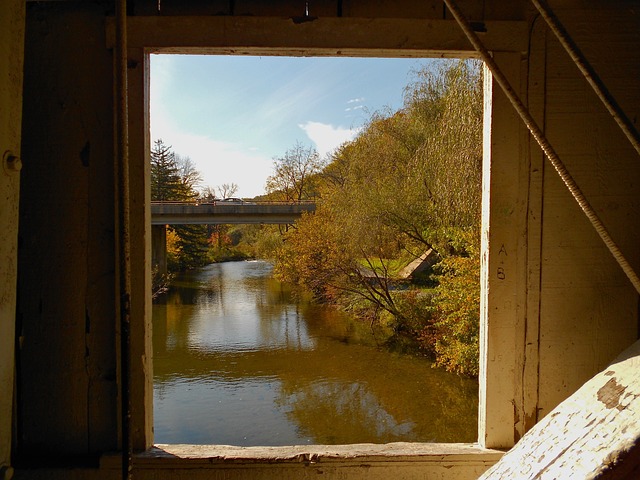
Joseph Kirkpatrick, William Sloan, Samuel Potts; township clerk, David Hill.The township was named Cowanshannock after the creek flowing through the
very picturesque valley which it drains the entire lengthââ¬âbeyond the entire
lengthââ¬âbetween its eastern and western boundaries. Cowanshannock is an
Indian name, and, like other such names, is significant. The general opinion
of the people of this region is, that it means “banks of flowers.”
On the 26th of January, 1833, “C.”, enchanted with the
beauty of this valley, as he or she had seen it in the different phases,
indited a poem, the them of which was, “Cowanshannock, or Bed of
Roses,” from which this stanza is cited:From sloping hills and valleys deep,
The Bed of Roses takes its rise,
Winding its way through glade and steep,
From eastern towââ¬â¢rd the western skies.
The pretty conception of the meaning of Cowanshannock is, however, spoiled
by the reality, for Heckewelder says: “Cowanshannock, a branch of the
Allegheny in Armstrong county, corrupted from Gawansch-hanne— signifying green-brier1
stream, or brier creek. Gawunschige— briery. So it must
be inferred that the Indians found this now lovely valley more thorny than
rosy.The purchase line of 1768, or the old purchase line, as it is often called,
traverses the township from the chestnut tree mentioned in the boundaries at
the angle south of the north branch of Plum Creek in the line between this and
Indiana county, north 79 degrees west, passing through the brick house of Jno.
Boyer about twenty-five rods east of Huskinsââ¬â¢ run, and crossing the western
boundary of the township a little above the angletherin. All that portion
south of that line was taken from Plum Creek township, and was included in the
old purchase of 1768, and it constitutes about one-third of the territory of
Cowanshannock township. The original tracts in this portion
were in the names of warrantees as follows: A part of the Alexander Dallas
tract; the John D. Mercer tract, 402 acres, seated by David McCausland; James
Dundas, 402 acres; Parsons Leaming, 406 þ acres, seated by John Byerly; parts
of the Jacob Amos and Mary Semple tracts; Joseph Fisher, 402 acres; Joseph
Nourse, 402 acres, seated by David McCausland; Patrick Farrell, 406 þ acres ;
Samuel Fisher, 443 þ acres, seated by William McCausland; Joseph Norris, 356
acres, seated by James Guthrie; Thomas Bradford,452 acres; Elizabeth
Henderson, two tracts, 415 ý and 413 þ acres; nearly all of Andrew Hendersonââ¬â¢s,
413 þ acres, seated by George McLaughlin; the greater part of Robert Semple,
Jr., tract, 421 acres; William Finney, 427.5 acres, seated by John Black;
William Wistar, 306 acres; John Dealing, 318 ý acres; parts of the Isaac and
Samuel Morris tracts; John Lart, 330 þ acres, seated by Daniel Wampler;
George Snyder, 307 ý acres; John Gill 321 1/3 acres, seated by Jacob Beer,
Jr.; Benjamin Davis, 325 ý acres, one-half above the purchase line, seated by
George and Michael Somers; Jonathan D. Sergeant, 402 þ acres- small portions
of it are in Kittanning and Plum Creek townships; parts of the Larken Dorsey
and James Dubbs tracts; Richard Wellsk, 330 þ acres, seated by Jacob Beer.
Wells purchased, January 7, 1774, the George Snyder tract and various other
tracts elsewhere mentioned, at five shillings per tract. 2 He was
an adherent of the English in the revolutionary struggle. Colonel John Bayard,
in his letter to the Council of Safety, from the camp at Bristol,
Pennsylvania, December 13, 1776, wrote this of him: ” We are informed
today by a gentleman from Burlington that Richard Wells was there yesterday,
doubtless with advice to the enemy and returned that night. He informed the
people that General Putnam intended burning the city.” At a meeting of
the Council of Safety, January 14, 1777, Wells was nominated as a member of
that body. In his reply to the communication informing him thereof , the next
day, he said : “Sincerity and candor forbid my concealing the true reason
of my wishing to decline the appointment; I hope not to offend by my honesty,
yet I cannot, I think, with an upright conscience, withhold the confession.
The post, gentlemen, which you fill is built on a foundation so opposite to my
sentiments, and the money I should have to distribute on your account so
expressly put into your hands for the purposes of war, that I should stand
condemned by my own heart if I accepted the charge. Far be it from me to
undertake here to arraign your conduct in the prosecution of your office; I
cheerfully grant to all men that freedom of action which I claim in return,
and assure you with great sincerity that whilst, on the one hand, I cannot
give a hearty approbation to the present system; on the other, I will never
oppose or disturb it; my constant study being to pass through life at peace
with my own breast and all the world. I know that I have been more explicit
than common policy might have dictated, but thought I should have been wanting
in justice to you and myself not to have ingenuously told you the truth. I am
much obliged by your entertaining so good an opinion of my integrity as to
nominate me to so important a trust, and hope you will not think too
unfavorably of me for the part I act.”In the other portion, north of the purchase line, were these tracts: Henry
Shade, 400 acres, warrant 584ââ¬âbounded by the purchase line on the south,
which, according to the description of this tract in the mortgage from Shade
to John Foyle, Jr., July 2, 1805, must have been the northern boundary of
Westmoreland county, for this tract is there represented as having previously
been in Northumberland county, and if so, that northern boundary line of
Westmoreland county must have struck the Allegheny river near Trubyââ¬â¢s run,
in Kittanning, instead of near the mouth of the Cowanshannock, as seems to
have been the case by its location in some of the old maps; H. LeRoy &
Co., 958 acres, warrant No. 3118, along the north side of the purchase line;
H. LeRoy & Co., two tracts, 948 ý and 990 acres, warrants Nos. 3126 and
3128, partly in Indiana county; H. LeRoy & Co., 1096 ý acres, warrant
3125; James Kirkpatrick, 100 ý acres, mostly in Indiana county; Samuel Bryan,
544 acres and 106 perches, warrant 679; T. W. Hiltzimer, 1,100 acres, warrant
5146, partly in Wayne; H. LeRoy & Co., 847 ý acres, warrant 3095, seated
by John Simpson and John Kirkpatrick; John Denniston, 180 þ acres, warrant
3829, tract called “Dublin”; John Denniston, 170 ý acres, warrant
3830, tract called “Abbington”; John Sloan, 226 ü acres, warrant
5639, tract called “Stanton”; Joseph Cook, treasurer of Westmoreland
county, Pennsylvania, in 1789-90, 393 acres, warrant 5637, called “The
Grove”; part of the Wallace tract, warrant 4162; part of the Dr. Wm.
Smith tract, mentioned in the sketch of Wayne township – he was a member from
Philadelphia of the committee for the Province of Pennsylvania, July, 1774,
and one of the deputies chosen by the several counties; George Bryan – he was
vice-president of the supreme executive council of this state in 1777, and was
commissioned a puisne judge of the supreme court, April 3, 1780- 548 ü acres,
warrant 669; Samuel Denniston, 255 ý acres, warrant 3621, tract called
“Alexandria”; John Denniston, 239 acres, warrant 3922, tract called
“Derry”; Joseph Cook, 447 þ acres, warrant 3636, tract called
“Wheatfield”; Aaron Wor, 447 acres, warrant 5483; John Craig, 245
acres, warrant 3652; John Denniston,3 309 acres, warrant 3618,
seated by Robert McIlwain; William Denniston, 220 acres, warrant 3620;
Archibald McGahey, 100 acres; Meason & Cross, 543 ý acres, warrant 675;
George Bryan 1,097 ý acres, warrant 672- 500 acres seated by John
Schrecongost, and 500 by Jacob Torney; William Findley, 281 acres, warrant
5638, dated June 27, 1894, tract called “Fidelity”, patent to George
Roberts, March 2, 1895, Robertsââ¬â¢ heirs to Samuel Patterson (55 acres), April
16, 1836; Robert McClenechan,328 þ acres, warrant 515; William Findley, 100
acres, warrant 3658, seated by Daniel River; Reynolds & Clark, 428 þ
acres, warrant 6041; H.LeRoy & Co. (Holland Company), two tracts, 1028 þ
and 1000 acres, warrants 3022 and 3030; Timothy Pickering & Co., 627 ý
acres, warrant 11, seated by James Craig, James Simpson and Isaac Simpson;
Timothy Pickering & Co., 1057 ý acres, warrant 176; Timothy Pickering
& Co., 1132 ü acres, warrant No. 25.The last-named company consisted of Timothy Pickering, Tench Coxe, Samuel
Hodgdon, Duncan Ingraham, Jr., Andrew Craiger, and Morris Fisher. It is set
forth in their article of agreement, dated April 6, 1785, that they expected a
land office to be opened on the 1st of the next month for the sale
of lands purchased from the Indians in 1784, which is frequently called
“the late purchase,” and that they were desirous of purchasing a
considerable quantity of these lands. Pickering, Coxe, Hodgdon and Ingraham
were appointed a committee to procure warrants and manage the other business
of the company. It was stipulated that the members of the company should be
joint tenants, that the lands purchased by their committee should be conveyed
to them as such in fee, and that a contract should be made with Gen. James
Potter to locate their warrants, to show the lands covered by them to the
surveyors of the districts or counties in which they lay, and to cause returns
thereof to be made to the Surveyor-Generalââ¬â¢s office. Potter was to receive
seventeen thousand acres as his compensation for surveying and locating
sixty-three thousand acres for the company, for the division of which from the
companyââ¬â¢s land, by his executors or two of them, he provided in his will,
dated October 27, 1789. The company and Andrew Gregg and James Poe, two of
Potterââ¬â¢s executors, entered into an agreement for the partition, March 3,
1795. By that partition the Pickering tracts, warrants Nos. 11 and 176, were
allotted to Potterââ¬â¢s executors for the use of his heirs.The ostensible evidences of earliest occupation in that part of this
township south of the purchase line are on the farm now owned by Thomas
McCausland, which is a part of the Joseph Nourse tract.There are vestiges of a circumvallation on that Nourse tract, which
encompassed about one acre and a half, and was circular. According to reliable
information, which has been transmitted from the persons who settled
thereabouts in and prior to 1812, the parapet must have been four or five feet
high, with a fosse or trench surrounding it, the depth and width of which
could not be accurately ascertained, as it was partly filled when it was
discovered. There is the stump of a cherry tree within the parapet, eighteen
inches, and another one of the same kind in the trench, twenty inches in
diameter. The tree had grown from an old stump which is very much decayed.
Both of these trees were cut down in 1872 or 1873.There is a mulberry tree from twelve to fifteen inches in diameter two rods
south of the parapet, which has also grown from an old stump, and there are
two white-oak trees about two feet in diameter about the same distance east of
the parapet. There appears to have been a well at the center within the
parapet.Clay smoking-pipes, with the initials “W.W.” upon them, and
hatchets, of a superior quality of steel, supposed to be of English
manufacture, were found here by the early settlers. Traces of that
circumvallation are still visible. Its location is on a beautiful elevation,
which commands an extensive view up and down the valley of the north branch of
the Plum Creek, anciently called Finneyââ¬â¢s Run, thirty rods north of this
branch and twenty rods west of McDoleââ¬â¢s, or Madoleââ¬â¢s run; between that
location and Branch is the Plum creek road; one hundred and twenty rods
southwesterly from it is the site of what, tradition says, was “Hutchisonââ¬â¢s
hunting camp,” on a run emptying into the Branch on its south side, and
therefore, called Hutchisonââ¬â¢s run. Who Hutchison was or whence he came has
not been handed down to the present residents of this region.Source: Page(s) 286-309, History of Armstrong County, Pennsylvania by
Robert Walker Smith, Esq. Chicago: Waterman, Watkins & Co., 1883.
Transcribed December 1999 by Pamela Clark for the Armstrong County Smith
Project.
Contributed by Pamela Clark for use by the Armstrong County Genealogy Project
(http://www.pa-roots.com/armstrong/)Armstrong County Genealogy Project Notice:
These electronic pages cannot be reproduced in any format, for any
presentation, without prior written permission.Return to the Chapter 13 Index
Return to the Historical Index
Return to the Smith Project
About Author
