HEADER
Chapter 21
Burrell TownshipFORMATION-LANDOWNERS-ASSESSMENT LIST OF 1805-06-INDUSTRIES-GUNPOWDER
FACTORIES- A “PAPER” TOWN-SALT WORKS-BRICK CHURCH-GEOLOGICALBurrell township, which was formed in 1855 out of parts of Kittanning,
Kiskaminetas and Plum Creek townships, was named after the late Judge Burrell,
who was president judge of the Tenth Judicial district, composed of Armstrong,
Indiana and Westmoreland counties. Its boundaries are Plum Creek and South
Bend townships on the east, Kiskiminetas, Parks and Bethel on the south and
west, and Kittaning township on the north. The principal stream running
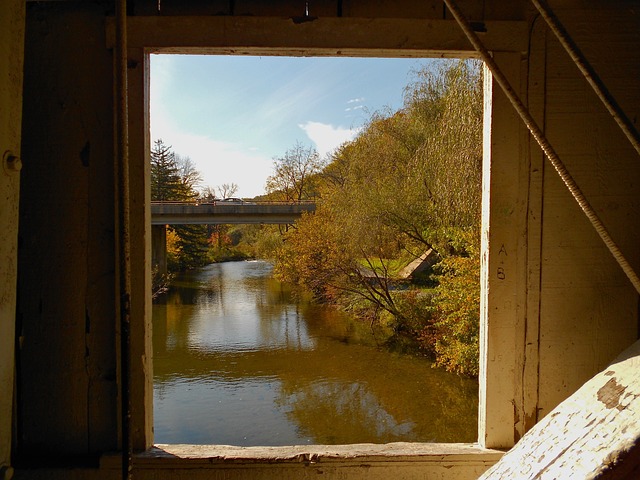
through the township is called Crooked creek, which amply justifies its name.
The Indians called it Woak-hanne, the stream with large bends.There were thirty-six tracts in the present limits of this township in the
period of settlement, and the landowners and settlers were: Reading Beatty,
Jacob Hart, James Shields, Robert Finney, William Palmer, Robert Carnahan,
John Wagle, James VanHorn, Adam Fiscus, Jacob Beer, William Kerr, Thomas York,
George Elliott, John Brown, John Beck, James Renwick, John Pitts, James Clark,
John Schall, William Sykes, Michael Schall, William Eckhart, John Salter,
Christopher Hoover, Agnes Kyle, Robert Adams, Isaac Wagle, David Sloan, Joseph
Shoemaker, Henry Davis, Malcolm Campbell, George Shoemaker, William Clark,
Robert Cogley, Adam Wilhelm, John Craig, George Helffreich, Michael Schall,
George P. Scheffer, Francis Cooper, John Davison, George Risler, Andrew Beck,
Isaac Mechlin, John Robb, George A. King, Michael Huffnagle, James Arnold,
Valentine Shallus, Thomas Milliken, Joseph Sansom, Isaac Mather, Peter Rupert,
John Vanderen, Michael Hillegas, James Hamilton, Thomas Hamilton, James Hall.Michael Huffnagle was one of the captains of volunteers raised in
Westmoreland county for the defense of the frontiers in 1779, and was
afterward commissioned lieutenant. In 1783 he had charged of the timber and
reserved land of the tract opposite Pittsburgh. He was later prothonotary of
Westmoreland.Michael Hillegas was for several years before the Revolutionary war United
States treasurer.Warrants for several of the tracts of the settlers mentioned above were
dated as early as 1776.OLD ASSESSMENT LIST
The following were the assessments made in this townhip in 1805-06, when it
was a part of Allegheny: George Beck, 160 acres, three horses and four cattle,
appraised at $210 in 1805, and $205 in 1806; John Henry, 63 acres and three
cattle, $33.90 in 1805, and $18 in 1806: James Hall, 250 acres, one
distillery, two horses and two cattle, $242.50 both years; Christopher Hoover,
200 acres, one horse, two cattle, $120 both years; George Helffreid (Helffreich),
one horse, one head of cattle, $15 in 1806; George Painter, 98 acres, one
sawmill, one head of cattle, $110 in 1805, and $10 in 1806; George Peter
Shaeffer, 400 acres, one horse, one head of cattle, $315 in 1806, Michael
Schall, Sr., 400 acres, one head of cattle, $305 in 1805, and $233 in 1806;
Michael Schall, Jr., 275 acres, two horses, two cattle, $167.50 each year;
John Schall, blacksmith, $10 in 1805; Jacob Schall, single man; George
Shoemaker, 225 acres, two cattle, $178.75 in 1805, $183 in 1806; Adam Wilhelm,
160 acres, one horse, two cattle, $100 each year; Isaac Wagel, 50 acres, $75
in 1806. There must then have been a population of about sixty. The valuation
of these tracts of land then varied from twenty-five to fifty, sixty-nine and
seventy-nine cents and acre. The portion of that list showing the returns of
unseated land for those years is not accessible-it is probably lost. Such
land, a few years later, was generally valued at fifty cents an acre.COCHRAN’S MILLS
The only settlement of importance in this township is Cochran’s Mille,
which is the oldest mill-site in the township, having been located in 1800 by
George Painter. He was assessed with a grist mil and sawmill in 1804. These
mills through various periods have been known as Wagle’s, Richards’, Craig’s,
Davis’, and Wright & Thompson’s mills. Michael Cochran became possessed of
them in 1858 and his name has stuck to this locality ever since. John Schwalm
and W. H. Carnahan bought the land and mills from the executors of Cochran in
1871 for $17,000. The present proprietor is H. A. King.In 1822 Irwin & McClelland were assessed with fulling mills at this
point. In 1826 Anthony Helffreich announced that he had everything necessary
to full, dye and dress cloth n the best manner. Isaac Kinnard started a
fulling mill here in 1834, subsequently converting it into a woolen factory,
which was operated by him and his son until 1880.The first store was opened here by Michael Cochran in 1849. A Grange store
was also operated there for a number of years by Schwalm & Carnahan.The first bridge at this point was a wooden one with stone piers, built in
1865. The present one is of steel.Pitts’ Mill post office was established in 1843, with Joseph Miller as
postmaster. It was changed to Cochran’s Mills in 1855, with Robert A. Paul as
the official in charge. Francis T. McKee is the present postmaster.O.J. King and F. T. McKee are the storekeepers at Cochran’s Mills in 1913,
and G. W. Riffer is the village blacksmith. The resident dentist is Dr. A. J.
Elliott.
Mateer is a small settlement in the southern part of the township
named from the original owner of the tract, and has a few houses and a store
kept by J. A. Klingensmith, who is also the postmaster.ANCIENT POWDER MILLS
About 1811 George Beck, Sr., commenced to manufacture gunpowder on Pine
run, near its mouth, and continued to carry on the business in partnership
with his sons until 1826, when an explosion which killed one man, and
partially destroyed the buildings, caused a cessation of the work. His powder
was made with willow charcoal and enjoyed a high reputation in Pittsburgh and
Kittaning, as well as further east.Another powder-mill was operated in 1817 on Crooked creek just above
Cochran’s Mills by George Beck.John R. Schaeffer erected the third powdermill on Pine run, near the
extreme northern line of the township, in 1822. An explosion occurred there in
1824, just after all the employees had left, which badly damaged the works. It
was soon afterward converted into a linseed oil mill, and later into a
distillery, which has long since been closed.A “PAPER” TOWN
“Williamsburg” was laid out in 1818 by William Fiscus, Sr., on
the Hoover tract in the southern part of the township, and the streets given
various names. This was as far as the town ever went, for in 1823 the assessor
stated that there were no residents and the lots were so low in value that
“the tax could not be got off them.” He therefore assessed the plot
as six acres at the valuation of $6.SALT WORKS
Some time prior to 1820 a salt well was bored on the banks of Crooked creek
in the southern part of the township by James Richards. Another well was bored
on the creek below Cochran’s Mills by Michael Townsend in 1824. Later on this
works was operated by John Parks. None of these wells was very profitable and
they were afterward abandoned.In 1876 there were in this township 127 farmers, 62 laborers, 4
blacksmiths, 3 carpenters, 3 teachers, 2 preachers, 2 physicians, 2
wagonmakers, 1 civil engineer, 4 merchants, 1 miller and 1 shoemaker.The census of 1860 gives the population of Burrell township as 833. In 1870
it was 964; in 1880, 1,047; in 1890, 922; in 1900, 893; in 1910, 833.The 1913 assessment returns of Burrell township show: Number of acres of
timber land, 3,334, cleared land, 10,209, valued at $212,900; houses and lots,
23, value $6,489, average, $282.13; 263 cows, valued at $3,809, average value,
$14.48; 245 horses, valued at $7,303, average value $29.80; total valuation,
$237,000. Taxables, 282. Money at interest, $77,146.SCHOOLS
One of the old log schools of the early days of settlement in this county
was built several miles up Crooked creek, thus placing it about in the
territory of Burrell. It is not known who was the first teacher. There were
three assessed in Allegheny township at that time-James Shall, William Smith
and James Moore. Isaac Kinnard and Samuel Murphy were later teachers in this
township.In 1860 the number of schools was 8; average number months taught, 4; male
teachers, 8; average salaries per month, $16.88; male scholars, 172; female
scholars, 114; average number attending school, 177; cost of instruction each
scholar per month, 49 cents; amount levied for school purposes, $664.87;
received from State appropriation, $60.62; from collector, $500; cost of
instruction, $540; fuel and contingencies, $24.In 1870 the number of schools was 8; average number months taught, 5; male
teachers, 7; female teachers, 2; average salaries of males per month, $31.55;
average salaries females per month, $30.69; male scholars, 185; female
scholars, 131; average attendance, 224; cost per month, 83 cents; amount of
tax, $1,164.60; State appropriation, $209.25; taxes, $1,283.74; cost of
schoolhouses, $64.75; teachers’ wages, $1,254.72; paid for fuel, fees, etc.,
$135.45.In 1913 the number of schools was 8; average number months taught, 7; male
teachers, 3; female teachers, 5; average salaries, male, $40; females, $42;
male scholars, 111; female scholars, 113, average attendance, 148; cost per
month, $2; tax levied, $1,726.65; received form State, $1,462.66; other
sources, $1,784.34; value of schoolhouses, $5,200; teachers’ wages, $2,310;
fuel, fees, etc., $842.91.The school directors were: T. J. Lemmon, president; E. E. Shaffer,
secretary; J. A. Myers, treasurer; J. F. Riggle, W. M. Knepshield.BRICK CHURCH
The name of this little settlement arose from the fact that at this point
was built one of the first brick churches in this county. Most of the early
edifices were of plain frame construction and a brick building was a luxury in
those days.The first Evangelical Lutheran Church within the presents limits of this
county was St. Michael’s, whic was organized in 1806, by Rev. Michael Steck,
Sr., of Greensburg. The original members of the church were twenty-four,
namely: John George Helfferich and George Peter Schaeffer, elders; John Philip
Schaeffer, Michael Schall, Sr., Isaac Wagley, Sr., Jacob Waltenbaugh, Henry
Davis, Jacob George, Sr., William Heffelfinger, Adam Wilhelm, Philip Hartman,
George A. King and their wives. The number increased rapidly. At least two
other Lutheran churches have sprung from this one.Before the regular organization of churcher in this region, clergymen,
chiefly Lutheran and German Reformed, itinerated and held religious services
at private houses, one of which, in what is now Burrell township, was George
Peter Schaeffer’s, frequently mentioned in Rev. Gabriel A. Reichert’s diary,
which was in the vicinity of the mouth of Cherry run, near which Mr. Reichert
resided several years before he was called, in 1837, to the pastorate of
Christ’s and Immanuel Churches in Philadelphia. Previous to his removal
thither, his itinerations had extended east to the Allegheny furnace, then in
Huntingdon, now in Blair county, north to Venango and Crawford counties, and
through the western and southern parts of this county, so that his
ministrations occurred at Schaeffersut once in four weeks. He preached a trial
sermon there, July 6, 1823.A congregational meeting was held there August 3d, when St. Michael’s
Church was reorganized, and it was determined that his salary would be paid
from the first day of July. The officers were installed August 31st. His diary
shows that on April 11, 1824, he baptized four children, two of whom were John
Householder’s, and then or about that time confirmed twenty-five persons, the
youngest of whom was fourteen years of age, and the oldest fifty-five. Of that
number Peter George was known to be still living in 1876. There were then
sixty-five members.The first church edifice, 30 by 40 feet, was constructed of square hewed
logs, about 1820. Its site was about a mile and a half northeast of the mouth
of Cherry run.It was announced in the Kittanning Gazette that the Evangelical Lutheran
church, near George P. Schaeffer’s, was consecrated on Sunday, Sept. 16, 1832,
when Revs. Steck and Hacke, of Greensburg, Pa., officiated-the former a
Lutheran, and the latter a German Reformed clergyman. The Lutheran church was
then under the charge of Rev. G. A. Reichert.St. Michael’s Evangelical lutheran Church was incorporated in 1850. The
charter officers were: Rev. George F. Ehrenfeldt, pastor; Isaac Kinnard and
George King, elders; Peter Hileman, Samuel Woodward and George Riggle,
deacons. The second church edifice, brick, 44 by 60 feet, height of ceiling 14
feet, was erected in 1852, at the crossroads on Anthony Helfferich’s land
about a mile north of the old site, and was dedicated soon after its
completion, by Rev. Daniel Earhart and others. It was razed to the ground by
one of the violent storms in the summer of 1860. The present brick edifice was
soon after erected, through the exertions, in part at least, of Rev. Michael
Swigert, on the same site. Members in 1876, 225; Sabbath school scholars, one
hundred.Rev. J. N. Wright was pastor in 1913. The officers are: Fred Held and E. E.
Schaeffer, elders; J. E. Kinnard and J. E. Yount, deacons. The little
settlement which surrounds the brick church possesses one store, kept by H. A.
King, who is postmaster, and a blacksmith shop, operated by F. J. Works.The Church of Christian Brethren was organized about 1852. The edifice was
a one-story frame. It was incorporated by the proper court June 7, 1853. The
charter officers were: Joseph Shoemaker, elder; Joseph B. McKee, Thomas A.
McKee, deacons; Samuel Wilcox, Jr., John Carnahan, Daniel Shoemaker, Daniel
Keefer, David Rarich, trustees. The church is now abandoned.The Methodist Episcopal Church was also organized about the same time as
the last-mentioned one. Its edifice is one-story frame.GEOLOGICAL
The Apollo synclinal runs directly through the center of this township,
from northeast to southwest. The general structure of the strata is similar to
that of Plum Creek. Crooked creek winds its tortuos way through the middle of
the township and forms a maze of short and steep valleys, diverting the roads
into many twists and turns.The highest point in the township is almost the border of Parks township,
in the southwestern portion, and is 1,561 feet above the sea.Source: Page(s) 187-190, Armstrong County, Pa., Her People, Past and
Present, J. H. Beers & Co., 19114.
Transcribed July 1998 by Donna E. Mohney for the Armstrong County Smith
Project.
Contributed by Donna E. Mohney for use by the Armstrong County Genealogy
Project (http://www.pa-roots.com/armstrong/)Armstrong County Genealogy Project Notice:
These electronic pages cannot be reproduced in any format, for any
presentation, without prior written permission.Return to the Beers Project
Return to the
Armstrong County Genealogy Project
Return to the
Armstrong County Genealogy Project
Return to the
Armstrong County Genealogy Project
(c) Armstrong County
Genealogy Project
About Author
