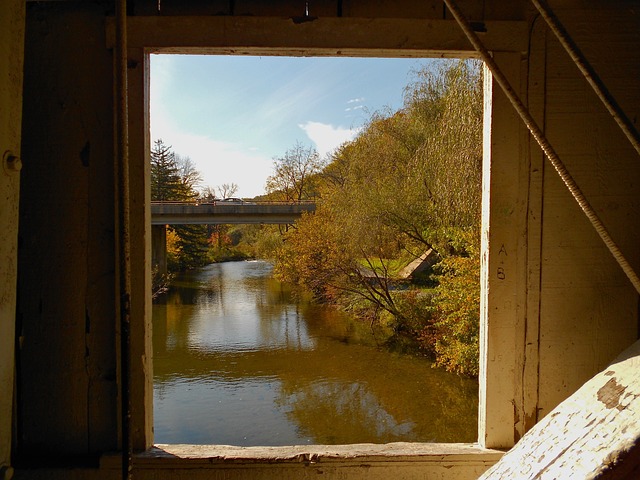
HEADER
Beers Historical Record
Volume I
Chapter 16
Freeport BoroughPREHISTORIC REMAINS
From undoubted evidences in the shape of mounds, clearings, fortifications
and other prehistoric remains there is no doubt that the site of Freeport was
once as densely populated as at present, although by strange and unknown
races, whose history we can only conjecture. But of the history of the present
population and their immediate ancestors we have very definite information of
most interesting character.BLOCKHOUSES
Some time prior to the establishment of permanent peace by Wayne’s victory
over and treaty with the Indians, a blockhouse was erected on the Allegheny,
about 120 rods above the mouth of Buffalo creek, which is now on Water, below
Fifth street, Freeport. Its commandant was Capt. John Craig, whose command
consisted of forty or fifty men, most of whom were inexperienced soldiers,
“raw recruits,” and were addicted, before they had been tried, to
boasting how easily they could defeat the Indians. They were “brave in
words,” and continued to be until they were tried. Gordon and Mehaffey,
two old rangers, determined to test their pluck. With the consent of the
commandant, they were marched one day to the spring on the hillside north of
the blockhouse. Gordon and Mehaffey, disguised as Indians, having posted
themselves among some rank ironweeds just below the spring, yelled and whooped
and shook those weeds, which so frightened those raw soldiers that they
hastily threw their guns down in the road and rushed pell-mell into the
blockhouse, to which Gordon and Mehaffey returned in the evening by the way of
the “eddy” and over the river bank, and were refused admittance by
those soldiers because they feared the presence of Indians below the bank, who
would rush into the blockhouse if it were opened. The commandant finally
ordered Gordon and Mehaffey to be admitted. When those soldiers learned from
them that they were the only Indians in those ironweeds near the spring—when
they realized how readily they had allowed themselves to be alarmed by that
piece of “bushwhacking”—that they had so needlessly proved
themselves “cowards in the field,” they hurriedly left the
blockhouse. Craig said a regiment couldn’t have kept them there after they saw
how easily they had been scared.In those early war times there was a place of refuge on John Reed’s farm on
the left bank of the Allegheny, about two and a half miles below the mouth of
the Kiskiminetas, called “Reed’s Station,” which was named after
“Uncle Johnny Reed,” as the owner of the ground on which it was
situated was called.FIRST SETTLERS
James McCormick, the second sheriff of this county, settled here in 1797,
and opened a hotel and established a ferry. By the act of April 4, 1798, such
parts of Allegheny county as were then within Elder’s district, being part of
Deer township, were made an election district, and the place fixed for holding
the elections was “at the house of James McCormick, in the town of
Freeport,” which was the first house built on Water street.’ Some time
during that year Charles Duffy and his family arrived here from Ireland and
stopped at McCormick’s, where his daughter Barbara, then in her eleventh year,
remained several months. Her father located on the headwaters of one of the
western tributaries of Buffalo creek, then in the wilderness. The town was
laid out in 1796 by William and David Todd, and was at first called
“Toddstown,” but from the fact that David Todd insisted that it
should always remain a free port for water craft, the name was later changed
to its present one.The first house in Freeport was built beside the old blockhouse by Andrew
Patterson. Among other later arrivals at this place were Jacob Mechling,
formerly of Greensburg, and afterward of Butler, and his co-commissioners,
Hamilton, Lane, Morton and Weaver. Mechling, in his “journal of
proceedings to fix the seats of justice in the counties of Armstrong,”
etc., notes their arrival at the mouth of Puckety, June 3, 1802, and then
“eleven miles to Freeport, where we lodged that night,” which is all
he noted in his journal respecting this town, in which there were then but a
very few log houses, besides McCormick’s tavern, where he and the other
commissioners probably lodged.In 1805 there were only eight indifferent houses of hewn logs. The first
one was McCormick’s tavern; the second one, built by Thomas Johnston, adjoined
McCormick’s; the third, by one of the Thornburghs on or near Water, above
Fifth street; the fourth by Henry A. Weaver, on the north side of Market
street; the fifth on the second lot above the last-mentioned one; the sixth,
by Alexander Hunter, on Water, between Second and Third streets; the seventh,
by David Porterfield, on Water, between Third and Fourth streets; the eighth,
on Water, near Fifth street.The assessment list of Buffalo township for 1805 shows the valuation of
lots, personal property and occupations in Freeport to have then been:
Alexander Hunter, one house, one lot and four cattle, $102; the next year,
$96; Thomas Johnston, one house, one lot, two horses, two cattle and 400 acres
elsewhere in the township, $262; the next year $150; James McCormick, one
house, five lots, one horse, one cow and one ferry, $216; the next year, $222.
Jacob Weaver, who was the first postmaster, was the first assessed here in
1806, with one house, one lot, one horse, one cow, and as storekeeper, at
$111. Henry A. Weaver settled here before Jacob Weaver did; he had a Frenchman
as a partner in trade, who was an interpreter to the Indians; Peter Clawson,
who was raised near Greensburg, lived for years on his father’s farm at
Rumbaugh’s ferry on the Kiskimenetas, and was well versed in early events,
used to relate that about 1806 a considerable quantity of wheat and flour was
transported from Greensburg or Hannastown to Rumbaugh’s ferry, thence to
Freeport, and shipped thence by Weaver and his partner to Blennerhasset’s
island for the use of the expedition fitted out by Aaron Burr, and that Weaver
in consequence of being engaged in that shipment was obliged to be absent for
a while.The first separate assessment list of Freeport, in 1826, bears the names of
Philip Bohlen, Hugh Gillespie, John Drum, John Fullerton, Matthias Folcake,
William Gibson, George Helterbrand, William Painter, Andrew Sterrett, Thomas
Regan, John Dougherty, James Cain, Patrick Pree, Hugh Carson, Jacob Weaver,
Henry S. Weaver, John Wodison. The building of the Pennsylvania canal and the
construction of the aqueducts across the Allegheny and Buffalo creek, in
addition to the boring of several salt wells, gave an impetus to the growth of
the town in the years 1827-28. The work on the canal commenced here in the
summer of 1827, and boats made their first trips on it in 1828-29. The
“”Benjamin Franklin”” was the first packet-boat, said to
have been a very neat one, that plied regularly between Freeport and
Pittsburgh. Her first trip was on Feb. 6, 1829, with about thirty passengers.
Her speed was five miles an hour.While the canal was being made there were two settlements of Irish
laborers, called “Garry Owen” and “Mullengar,” one above
and the other below Freeport. The inhabitants thereof occasionally came to
patronize, at least they did patronize, the three taverns which then
flourished here, and seldom failed to enliven the town with their boisterous
hilarity. There was a racecourse on the lower flat on which some of the best
blooded horses from Kentucky and Virginia evinced their wonderful speed.
Jumping and foot races were common. Betting was brisk, and large sums were won
and lost on the quadruped and biped races. John Karns on a certain occasion
jumped from one side of the canal lock to the other, a distance of sixteen
feet. It is related that Simon Shields won $50 by jumping three
“stand-and jumps.” Other noted jumpers were Elliott and Samuel D.
Karns and Henry Gass. On St. Patrick’s day, in 1828, the Irish from
“Garry Owen” and “Mulllengar” had a large procession. They
were decked with pine and laurel to represent the shamrock. After marching
through town regaled by strains of music, they closed their celebration with
real Irish joviality at Neil Gillespie’s tavern. There were then about thirty
houses in Freeport.Freeport was incorporated as a borough in 1833, and the first election of
that year resulted as follows: Jacob Weaver, burgess; James McCall, assistant
burgess; Andrew Easley, James Milligan, William Moorehead, William Painter,
David Putney and Henry Weaver, town councilmen; David McCall, high constable;
John Drum, street commissioner; James Ralston and Joseph Shoop, overseers of
the poor; Jacob Alter, assessor; William Painter and James Ralston, assistant
assessors.The first meeting of the burgess and town council was held May 10th, when
William W. Gibson was appointed clerk. The assessment list for 1833 shows that
the borough contained the year its charter was granted 107 taxables. The only
occupations given in that list were: Merchants, 4; carpenters, 3; blacksmiths,
2; tailor, 1; laborers, 2; hatters, 2; shoemakers, 4; innkeepers, 3;; tanner,
1; mason, 1; limner, 1; teacher, 1; joiner, 1; wagonmaker, 1.ANCIENT AND MODERN INDUSTRIES
Benjamin King’s sawmill was the pioneer industry of the town, in 1843. J.
N. Nesbitt operated a fulling mill in 1835. Several sawmills were also in
operation in that year. David Scott was a tanner in 1836, Henry Hellerich ran
a pottery in 1838, Robert Martin was assessed as a weaver in that year, George
McCain’s gristmill was operated in 1839, and in 1840 T.P. & S. C.
Williamson started a foundry, the remains of which still stand as an eyesore
near the railroad depot. Hope Woolen Mills were started in 1841 by Samuel and
William P. Fullerton. The same year Jacob K. Rupp made windmills. David Putney
was the father of the brick business in the town in 1832. J. P. Stuebgen
started his brewery in 1866, running it until 1889. The first photographer was
Dr. David Alter, who took pictures not as a business but for his own
amusement. J. H. Douglas had a room here and took pictures before the war, and
Charles Tuxford was also engaged in the business about the same time. J. D.
Stewart and a man named Kelly were in the business during the late sixties and
in 1870.The Freeport Planing Mill was incorporated in 1875, with a capital of
$20,000. The firm is still in a thriving condition. A. King & Sons also
operate a large planing mill, near the center of the town.The Freeport Clay Products Company was organized in 1910 with a capital of
$200,000. The plant consists of two brick machines and twelve kilns, and the
daily product is 50,000 faced building brick, made from the fireclay mined on
the company’s extensive landholdings. Although a new company, the firm is
thriving and is considered the most important in the township. About fifty men
are employed the year round. The officers are: T. O. James, president; James
DeWitt, vice-president; A. L. Chapman, secretary-treasurer. The dirctors are:
J. H. Openheimer, James A. Grant, A. J. Fulton, G. L. Rutherford, Francis
Laube and T. G. Hill.The Buffalo Milling Company was incorporated in 1881 and commenced business
in the next year. It was operated until 1900. The owners were the same as
those of the planing mill, of which it was a part.Guckenheimer Brothers’ distillery, which was started in 1855, by Williamson
& Rhey, was begun to be operated by the present owners in August, 1866. In
1912 the firm of A. Guckenheimer & Bros. Was formed into a corporation,
and they now operate the largest distillery of rye whiskey in the United
States, consuming 2,100 bushels of grain per day. They operate their own
cooperage and employ 125 men. A 310,000-bushel grain elevator, a malthouse, a
stillhouse, and nine bonded warehouses, with capacity for 150,000 barrels,
constitute their complete plant. Part of the plant is located in Laneville.MERCANTILE
The merchants of Freeport are: Merchant tailors-J. O. Ralston & Son, J.
H. Shoop & Sons, and Frank Maxler. Dry goods-H. Brenneman and J. H. Moss.
Jewelers-H. Rumbaugh, R. V. Marshall. Druggists-E. N. Gillespie, Louis N.
Berube. Shoes-G. W. Benevitz, Jos. Gianotti. Hardware-E. H. Wallace, Fred
Sarver. Newsdealer-H. W. Rowley. Furniture__S. Turner & Son. Baker and
confectioner-F. A. Seitz. Flour, grain and feed-Smith & Zahniser, W. A.
Noble. Livery-Joseph Thomas, Ewing Bros.Freeport has seven grocery stores, one 5 and 10 cent store, three
milliners, four meat markets, two liverymen, and four barbers.HOTELS
The hotels of Freeport are well known in the county as models of comfort
and good living. They are:Central, T. G. Hill; Zone; Commercial, M. C. Mohr.BANKS OF FREEPORT
The Freeport Bank was organized in 1868, with a capital stock of $50,000.
It has weathered all the financial storms of the past without springing a
leak, and is established firmly in the financial life of the town. The present
officers are: Isaac Guckenheimer, president; Beynard Way, vice president; A.
M. Johnston, cashier; C. E. Hild, assistant cashier; Hugh G. Ralston, teller.The Farmers’ National Bank of Freeport was chartered in 1904, with a
capital of $50,000. The present officers are T. G. Cornell, president; W. A.
Jack, vice president; W. F. Turner, second vice president; F. K. Weaver,
cashier; W. E. Phillips, assistant cashier.PROFESSIONS
The first resident clergyman appears to have been Rev. Hugh Kirkland, who, as
is elsewhere noticed, engaged extensively in buying and selling town lots, and
who was first assessed here in 1830, and was the first pastor of the Associate
Church. Rev. William Galbreath was first assessed here in 1843 for the next
year, though not as a clergyman until a year or two later. He was pastor of
what is now the First United Presbyterian Church from then until 1845.Following on the assessment list of 1846 was Rev. Mr. McKee, who occupied
lot No. 2, Rev. Mr. Hawkins in 1849, and others at subsequent times, as
mentioned in connection with their respective churches.Dr. Charles G. Snowden was the earliest resident physician, who was first
assessed as such for 1832. Dr. J. B. Williamson was first assessed here the
next year; Dr. D. M. Borland in 1841; Dr. David Alter in 1843; Dr. Henry Weeks
in 1844; Drs. Thomas Galbreath and Samuel T. Redick in 1849; Dr. James A.
Donaldson in 1850; Dr. N. E. McDonnell in 1851; Dr. William P. McCulloch in
1859; Drs. Charles B. Gillespie and Thomas Magill in 1860; Dr. Robert L.
McCurdy in 1862; Dr. Christopher Krunpe in 1867; Dr. A.G. Thomas in 1868; Dr
William Plank in 1871; Dr. W. L. Morrow in 1872; Dr. A.M. Hoover in 1876.Dr. Alter’s scientific discoveries deserve in this connection a special
notice, for it was here in Freeport that they were made. In the latter part of
the summer or in the early part of the autumn of 1847 he invented the method
of manufacturing bromine in large quantities. He obtained a patent for his
apparatus used in making it July 5, 1848, and soon afterward commenced its
manufacture in company with Edward and James Gillespie, whose works were
situated on the right bank of Buffalo creek opposite the upper part of the
island, or about 120 rods above the mouth of the creek. In the latter part of
1853 and the beginning of 1854, he discovered the bands in the spectrum of the
elementary bodies, which was the foundation of spectrum analysis, and
published some of his observations in the numbers for July, 1854, and 1855, of
Silliman’s American Journal of Science.A signal service station was established here April 16, 1873, under the
charge of Dr. Alter, which was afterward in charge of his son, Dr. Myron H.
Alter. The present mode of making monthly reports, showing the relation
between the quantity of rain and the rise in the river, is the work of the
latter. High water here, March 17, 1865, reads 31.42 feet. Ice, Feb. 28, 1875,
was 17 1/2 inches thick in the river.The resident physicians in 1913 are: Drs. William H. McCafferty, James R.
McDowell, Charles H. McLaughlin, Charles A. Rogers, Lewis W. Schnatterly and
John L. M. Halstead.The earliest resident lawyer assessed here was James Stewart, United States
commissioner in bankruptcy, in 1843. The next were James Donnelly and J. Noble
Nesbitt, in 1846; Lawrence S. Cantwell, in 1848; James B. Fullerton, in 1849;
James A. McCulloch, in 1850; J. G. D. Findley, in 1869; Thomas N. Hathaway and
George G. Ingersoll, in 1871. The resident lawyers are S. F. Clark and D. R.
Nulton. Drs. J. W. Held and Harry McCulloch are the local dentists. The real
estate dealers are Barrett & Llewellyn, Findley & Taylor.NEWSPAPER
The first newspaper published in Freeport was the Olive Branch, of which
William Badger was the proprietor and editor, who had previously published and
edited the Armstrong Advertiser and Antimasonic Free Press at Kittanning, the
type and material of which he transferred thither in August or September,
1833. Its publication continued for about two years. The Freeport Columbian
and Leechburg and Warren Advertiser was established here by A.J. Foster in
1839, and was transferred in April, 1842, to John and Samuel McCulloch, by
whom it was published as a Democratic paper until about 1845. The Visitor,
after making divers visits to the domiciles of its patrons here and round
about, departed. The Freeport Ledger was published by A. J. Gibson from 1853
until 1855-56. The New Era was established by Simon Shoop in the spring of
1872, who, in a few years afterward, transferred it to James A. McCulloch, and
its name was changed to that of the Valley Times, which, in the early part of
1876, was transferred to Oswald & Simpson, and removed to Kittanning.The Freeport Journal was published first by a company organized in 1876,
the original members being Rev. J. J. Francis, W. J. Murphy and Thomas C.
Nicholson. The first number was issued May 18th of that year. In 1877 R. B.
McKee, at that time in the grocery business, took hold of the plant, formed a
stock company and in a few days raised $1,200. After trying several managers
until 1878, Mr. McKee Took up the task himself, and from that time to the
present the paper has been a decided success. “Bob” McKee has become
one of the institutions of Freeport, his name and influence being used to
further every matter of importance in the social or industrial life of the
town. So well is he thought of in the town that not a single rival publication
has been able to knock him out. In 1902 C. H. McKee was taken into partnership
by his father.Y.M.C.A.
The only Young Men’s Christian Association in the county is that of
Freeport, organized in 1907. The membership is gradually increasing and they
hope in the near future to build a home of their own. The secretary is P. A.
Brenneman.FREEPORT BUILDING AND LOAN ASSOCIATION
The Freeport Building and Loan Association was organized and incorporated
in January, 1887, and went out of business in 1913. It helped a number of
people to secure homes, made money for the non-borrowers, never distressed a
borrower, never lost a dollar by bad loans, and closed up business to the
satisfaction of all concerned.CHURCHES
THE METHODISTS
Unfortunately there is no complete history of the beginning of Methodism In
Freeport. All the official records of the church previous to 1867 are lost. In
October, 1833, Freeport was taken into the Butler Circuit, which then took in
parts of Butler, Armstrong and Allegheny counties. The first preachers were
Revs. William Carroll and H. Bradshaw. In November of the same year a class
was formed composed of Joseph Ford and wife, John Atkinson and wife, and John
A. Sterns. Worship was held in a frame house on Third street, afterward in a
schoolhouse on High street, between Second and Third streets. Then a currier’s
shop, which was somewhere near the Intersection of Market street and the old
Pennsylvania canal, was used for church purposes. Still later, near where the
Pennsylvania railroad station now stands, the Baptist congregation kindly
granted the use of their church at communion seasons, and other special
occasions. A church edifice was erected in 1840 on lot No. 1 on the corner Of
Fourth street and Mulberry alley, where the present church stands. Especial
honor is due to Wesley Bowman and Peter Ford for the Energy and self sacrifice
with which they pushed the enterprise to success. These were days of struggles
and sacrifices, and right nobly were they made by All those who laid the
foundation of Methodism in Freeport. The church organization was incorporated
Dec. 26, 1846, the trustees provided for and named in the charter being Jacob
Alter, John Atkinson, Wesley Bowman, Peter Ford, Leonard Leidy, Daniel
Richards, John A. Sterns and Robert C. Williamson.In 1877, the old building gave place to the present highly Artistic example
of religious architecture. The enterprise was carried to Completion under the
pastorate of Rev. M. McKendree Garrett, being dedicated in 1879. It is of red
brick, with a lofty tower, and is a creditable monument of old-time church
construction. So well was the work done that few repairs and no alterations
have been necessary in later years. The cost at the time of building was
$13,257. A substantial parsonage is located near the church, having been built
in 1899 at a cost of $3,500. The church has been blessed during its history by
having two honored superannuated ministers reside in the town. For some years
Rev. Richard Armstrong, a Methodist minister of the old school, resided in
Freeport, and frequently occupied the pulpit of the church with great
acceptability. He died Aug. 19, 1859, aged eighty-four years, and was buried
in the old cemetery on Fourth street. In 1899 Rev. J.W. Kessler, having served
forty-two years in the active ranks of the Pittsburgh Conference, took up his
abode in Freeport. He was ever ready to render any help to the church that he
possibly could and was a blessing to the whole community. He died Feb. 15,
1903, aged seventy-four years, and was buried in the Freeport cemetery.The pastors have been: with Butler Circuit-W. Carrol and H. Bradshaw, 1833.
A. Jackson and L. Janney, 1834. A. Jackson and E.J. Kinney, 1835. W.C.
Henderson and L. Whipple, 1836. J. McLean, 1837-38. P.M. McGowan, 1839. P.M.
McGowan and W. Cooper, 1840. J. Ray and J.S. Patterson, 1841. P.M. McGowan and
J. Phillips, 1842. C.C. Best and W.C. Morris, 1843. J. White and J.L.
Williams, 1844. J.L. Williams and W. Cooper, 1845. R.J. White, 1846-47. With
Tarentum Circuit-J. Murray, 1848. B.F. Sawhill, 1849. E.B. Griffin, 1850-51.
M.L. Weekly, 1852. A.G. Williams, 1853. D. Hess And A.W. Butz, 1854. D. Hess
and I. Aiken, 1855. Freeport Station-W. Cooper, 1856-57. A.G. Williams,
1858-59. A.H. Thomas, 1860-61. J.W. Shirer, 1862-63. R. Morrow, 1864-66. E.M.
Wood, 1867-68. E.B. Griffin, 1869. J.B. Uber, 1870-72. N.P. Kerr, 1873-75. M.
McK. Garrett, 1876-77. S.T. Mitchell, 1878. M.M. Sweeney, 1879-81. C.W.
Miller, 1882-83. A.P. Leonard, 1884-86. J.E. Wright, 1887-88. D.L. Johnston,
1889-91. D.J. Davis, 1892-94. Solomon Keebler, 1895-97. John Connor, 1898.
M.M. Hildebrand, 1899-1901. F.A. Richards, 1902-07. A.H. Davies, 1911. S.
Elmer Rodkey, 1911-13. The trustees are: Wilson Daugherty, John Atkinson, J.E.
Myers, S.P. Dixon, Newton Cuthbert, William Bowden, Joseph Beaumont, Joseph
Todd and E.M. Keebler. The membership is 300, and of the Sunday School, 350.PRESYTERIANS
The first Presbyterian services in Freeport were conducted occasionally
from 1827 to 1830 by Rev. John Redick, and afterward by Rev. John Wilson. In
1833 the formal organization was made, and we Fortunately can present the
complete list of original members: James Bole and wife, Isaac Bole and wife,
James Ralston and wife, William Hill and wife, Nancy Hill, Maria Hill,
Margaret Hill, Andrew Ralston and wife, Jane Weir, Elizabeth Weir, Mary Weir,
Mary Woods, James McCall and wife, Mary Murray, Elizabeth Roeny, Margaret
Stewart, William Laughery and wife, Margaret Girt, Betsy Girt, Mary Girt,
James Bole, Mary Ann Bole, Michael Moorhead and wife. In 1838 Mr. Johnston
resigned in favor of Rev. Samuel Caldwell, who remained until 1845. During the
period from 1846 to 1849 Revs. John K. Cornyn and D.D. McKee supplied the
pulpit and in 1849 Rev. William F. Kean became pastor. After nineteen years of
faithful service he resigned, in 1868. After a vacancy of one year, Rev. J. J.
Francis became pastor, resigning In 1879. Then came another vacancy of three
years, after which Rev. T.M. Thompson took charge, severing his connection in
1890. The succeeding pastors were Revs. William L. McClure and A.B. Elliott.
The present pastor, Rev. H.W. Hanna, came in 1912. The first house of worship
was a communistic one, erected on a lot donated by James Armstrong for the use
of the Presbyterians, Seceders and Episcopalians, which afterward became the
property of the Presbyterians. It was a frame edifice, erected in 1833. In
1850 a brick church was put up and in 1885 replaced by a modern brick
structure, costing $12,500. The ruling elders are: H.S. Smith, Dr. W.H.
McCafferty, Capt. H.P. Hudson, S.H. Crawford and W.B. Alter. The membership of
the church is 325, and of the Sunday School, 225.UNITED PRESBYTERIANS
The Associate Presbyterian-commonly called Seceder-Church was organized
about 1826. The original families of the congregation were the Brewers,
Colmers, W.W. Gibsons, Millers, Pattersons and Painters. Rev. Mr. Dickey,
pastor of the Rich Hill and Slate Lick Churches, preached here occasionally,
before the labors of the first pastor, Rev. Hugh Kirkland, began. His
successors were Revs. William Galbraith and R.B. Robertson. The church was
located on the south side of Fourth street, where the present parsonage
stands. The congregation was incorporated in 1866, The trustees being: John S.
Dimmitt, Robert A. Hill, Thomas Magill, Joseph B. Miller, William Moorehead
and James Ralston.The Associate Reformed Presbyterians organized about 1850. Their first
pastor was Rev. John Jamison, his successor being Rev. E.N. McElree. During
the latter’s pastorate the union of the Associate and Reformed Churches was
accomplished. The first services of the latter were held in a hall above Peter
S. Weaver’s store, on Market and Fifth streets. In 1858 the title of the
congregation was made United Presbyterian, and in 1865-66 a brick church was
built on the corner of Market and Fourth streets, the same now occupied by
F.A. Seitz as a store and meeting hall. The present church was built in 1902
at a cost of $13,500. After 1878 the pastors have in succession been Revs.
A.E. Linn, A.F. Kirkpatrick, W.E. Purvis, J.R. McFarland and T.C. McKelvey,
the latter being the present pastor, having been installed in 1912. The ruling
elders are: H.N. Miller, George Ralston, I. Linn Miller, W.M. Dougal and N.M.
McIntyre.EPISCOPALIANS
The Protestant Episcopal Church of Freeport was organized about 1833. Rev.
Moses P. Bennett had preached to the people here in 1823, and Rev. William
Hilton in the years following, Rev. B.B. Killikelly served the congregation as
missionary from 1833 to 1838. That year the present building was erected near
the Catholic Church. Rev. William White and Rev. William Hilton were his
successors.Trinity Protestant Episcopal Church was established in Freeport between
1834 and 1845, by Rev. B.B. Killikelly, from Kittanning. The present church
was erected in 1868, and has lately been extensively repaired. Many of the
interior furnishings were donated by friends from Kittanning and Pittsburgh.
There is no rector resident here now, but services are held by pastors from
Pittsburgh. The congregation is small.EVANGELICAL LUTHERAN CHURCHES
A few persons of the Lutheran faith were residents of the Vicinity of
Freeport before 1800, but they had no regular organization, attending services
in the old Eisaman settlement, several miles distant. No attempt was made to
establish a Lutheran Church in the town until 1834, when Rev. John H.
Hohnholz, of the Ohio Synod, began to hold occasional services In the
schoolhouse. He was followed by Rev. G.A. Reichert in 1836. The Last sermon
preached by Rev. Mr. Reichert in western Pennsylvania was in the Freeport
schoolhouse in 1837. His successor, Rev. John H. Bernheim, entered the field
in 1838 and soon organized a regular congregation, by 1841. He was very
popular. His successors, up to the time of the Lutheran controversy, were
Revs. George B. Holmes, 1844-48; George F. Ehrenfeld, 1848-51; Lewis M. Kuhns,
1851-56; Jacob H. Wright, 1856-61; Jeremiah H. Brown, 1861-65; J.K. Melhorn,
1865-68. In 1848 St. John’s purchased the old Baptist church for $400, but it
soon proved inadequate to hold the rapidly growing congregation, and in 1862 a
substantial frame church was erected at a cost of $2,100. In 1868 the great
controversy separated the congregation into two parts, Rev. J.K. Melhorn
adhering to the General Council, the courts later giving him possession of the
building. Subsequent pastors of St. John’s have been Revs. J.H.A. Kitzmiller,
1871-81; H.K. Shanor, 1882-90; William A. Laub, 1891-1900. The present pastor
is Rev. Herbert Martens.Emmanuel Evangelical Lutheran congregation was formed from 69 of the
members of St. John’s who adhered to the General Synod in 1868. The first
pastor after the separation was Rev. H.H. Hall, who remained until 1870, being
succeeded by Rev. D.R.P. Barry in 1875. The following year the courts decided
against the congregation using the old name of St. Paul’s and the name
Emmanuel was selected. A lot was then purchased on Buffalo street, and a
church was built at a cost of $4,000. The pastors from that date were: Revs.
Max Lentz, 1881; A.C. Felker, 1881-82; Isaiah Irvine, 1882-85; Luther M.
Kuhns, 1886-87; J.W. Breitenbach, 1887-88; J.E.F. Hassinger, 1889-93; H.C.
Reller, 1893-1901; John H. Diehl, 1901-02; H.C. Erdman, 1902. The present
pastor is Rev. J. Walter Shearer. The church membership is 145, and the
Sabbath school, 131. The church property is valued at $7,000.Zion’s German Lutheran Church was incorporated by the proper Court April
23, 1862, as the German Evangelical Lutheran Zion’s Church of the borough of
Freeport. Its charter officers were Rev. Gabriel A. Reichert, pastor; George
Eppler, and David Kraft, elders; John Mangold and George Pfaff, deacons. The
charter requires “the German language to be used forever in preaching the
doctrines of the church among this association.” The congregation is
small in numbers, and is served by Rev. Johannes E. Burgdorf of Ford City.
They occupy a small old-fashioned church, built In 1860.THE BAPTIST
The Baptist Church was organized Dec. 11, 1830, by Revs. William Shadrack
and George I. Miles, with the following members: Samuel Logan, Robert Lowry,
Rhoda Lowry, William Critchlow, David Robinson, George Montgomery, John
Robinson, Silas Ramsy, Benjamin Harbison, Daniel Howe, James Harbison, James
McWilliams, Jacob Robinson, Elizabeth Bowser, Hannah Longwell, Margaret Given,
Sarah Evans, Harriet Critchlow, Julian Hickenlooper, Rachel Myler, Martha J.
Leonard, C.G. Snowden, Sarah C. Snowden, John Congliton, Samuel Foreman, John
Haney, Andrew Wilson, Elizabeth Ulam, Abigail Howe, Adaline Rowley. The house
of worship of this congregation was built in 1849. The succession of pastors
has been as follows: Revs. William Shadrack, George I. Miles, William Penny,
John Thomas, W. Rockafellow, Benoni Allen, J.A. Davis, Edward M. Miles,
William A. Barnes, Peter M. Weddell, Thomas J. Penny, L.L. Still, D.W.C.
Herbey, J.G. Penny, David Williams, J.E. Dean, J.P. Jones, F.H. Jones, J.W.
Ewing and S. Drummond.Within the last ten years the congregation has gradually reduced In numbers
and at present there is no regular pastor occupying the pulpit. Supplies are
had from other towns.ROMAN CATHOLICS
St. Mary’s Catholic Church was organized about 1826. The original families
of this congregation were Philip Bohlen’s, Patrick Blacke’s, Donnelly’s,
Andrew Farley’s, Neil Gillespie’s, Magrand’s, McKenna’s, O’Reiley’s, Patrick
Shara’s, and others. The first pastor was Rev. Patrick O’Neil, who was
educated in France and came to this country as a missionary.The succession of priests after Father O’Neil included Revs. Patrick
Rafferty, Joseph Cody (neither of whom were resident pastors), M.J. Mitchell,
R. Phelan, J. Hackett, James Holland, A.A. Lambing, W.A. Nolan, G.S. Grace,
Frederick Eberth, C. McDermott, James Canivan, P.M. Garvey and James McTighe.The church edifice or chapel, situated on in-lots Nos. 132 and 133,
southwestern corner of High and Sixth streets, was among the first brick
structures built by David Putney, after his removal to Freeport in 1832. A
portion of the ground on which this chapel stood was devoted to burial
purposes until a new cemetery was elsewhere laid out. This structure was
replaced in 1849 by a neat brick building, now located west of the site of the
old church, on High street, the cost of which was $25,000. It has recently
been repointed and repaired by the congregation, under the present pastor,
Rev. James A. Garrigan, at an expense of over $4,000. A convent building,
occupied as a school by the Sisters of St. Joseph, stands across the street
from the church. It has also recently received extensive repairs.MILITARY COMPANIES
The Freeport Blues were organized in 1818, John Drum, captain; James
Patterson and Benjamin F. King, first and second lieutenants. They were
reorganized in 1831.The Freeport and Leechburg Dragoons were organized in 1832, with James T.
McKaig, captain; Alexander Scott and Alexander Sharp, first and second
lieutenants.The Freeport Artillery Company was organized in 1850, William F. Logan,
captain; Samuel Lane and James D. Torbett, first and second lieutenants.The Washington Guards were organized in 1849, Alexander Anderson, captain;
John J. Long and William S. Ralston, first and second lieutenants. They were
reorganized in 1854.The Freeport Zouaves were organized in 1860, Charles B. Gillespie, captain;
William B. McCue and Henry Torbett, first and second lieutenants. The name was
later changed to Freeport Cadets.The Duncan Karns Rifles were organized after the war, being uniformed and
equipped by S.D. Karns.Most of the members of the companies existing at the opening of the war
enlisted in the 78th Pa. Vols. The Soldiers Aid Society was organized Jan. 31,
1863, and its officers were: President, Mrs. Mary Galbraith; secretary, Miss
Mary Kennedy; treasurer, Mrs. Anna B. Weaver; committee on work and
expenditures, Mrs. Mary Murphy, Misses Selima Gibson, Hannah McClelland and
Nannie Woods, and seventy-three members, besides eighty-four “gentlemen
who were always at hand in any emergency.”H.S. Weaver Post No. 32, Grand Army of the Republic, is composed Of most of
the local survivors of the Civil war, and the officers are: R.B. McKee,
commander; A.H. Clawson, adjutant; H.H. Schwietering, quartermaster. This post
built the only monument to the soldier dead in the county, at A cost of
$1,800. The stone was contributed from his farm near Freeport, By L.W.
Patterson.BURIAL GROUNDS
The first white person buried within the limits of Freeport was Miss Fails,
who was drowned in crossing Buffalo creek in 1794. The old cemetery is located
opposite the present Presbyterian church, next to the schoolhouse, and many of
the pioneers of the town are laid in its narrow confines. Here lie the bodies
of Massey Harbison and her relatives, as well as many of the prominent
citizens of later days. Most of the bodies have been removed to the new
cemetery, and the rest will soon be taken away to permit the extension of the
school building.The Freeport Cemetery Company was incorporated in 1864, the trustees being
Robert Morris, John Ralston, David Alter, Samuel Fullerton and John Turner.
The property is ample in size to accommodate the interments for many years to
come, and is owned on the communistic plan, every lot purchased being a
shareholder in the company.SOCIETIES
The Armstrong Lodge of Ancient York Masons, No., 239, was constituted here
in 1852, when its charter officers were William F. Logan, W.M.; Alexander
Anderson, S.W.; Charles G. Snowden, J.W.; George W. Syphax, treasurer; Reuben
Michel, secretary. This lodge met in Anderson’s hall on the fourth Monday of
each month, and numbered about seventy-five members.Freeport Lodge, I.O.O.F., No. 379, was organized Oct. 1, 1849, at Freeport.
The charter members were the following, who were also officers: Samuel Shafer,
N.G.; J.D. Torbett, V.G.; J.W. Redpath, secretary; J. Welshans, assistant
secretary; Henry White, treasurer. Members in 1880, 34; present enrollment,
160.There are also in Freeport lodges of the Knights of Pythias, Royal Arcanum,
Eagles and Loyal Order of Moose.SCHOOLS
There was no school within the limits of Freeport for nearly a quarter of a
century after it was laid out. The most accessible educational facilities to
its inhabitants were then afforded at the Hall school, about half a mile
distant. P.R. Bohlen is said to have taught the first school here, in a log
dwelling house on Water street. According to Peter E. Weaver’s recollection
the first one was taught by a man of the name of Woodford in a house on Market
street, above Fifth. The next teacher was of the name of Lee, who taught but
one quarter. Those were what used to be termed “pay schools,” in
which some of the common English branches were taught-arithmetic, reading in
the Testament, spelling and writing.In 1832-33 James Pneuman, reputed to be a good mathematician, taught a pay
school on High street, between Fourth and Fifth. Such schools were more or
less liberally patronized until the adoption of the common or free school
system a few years later. Dr. Thomas Galbraith was the first teacher here
under this system. A frame schoolhouse was erected soon after its adoption on
in-lot No. 101, the southwest corner of Fourth and High streets.Rev. Hugh Kirkland, soon after his advent here in 1830, erected An academy
at the corner of High and Fourth streets, in which the classics And the common
and higher English branches were taught by him and Samuel Wallace.Some time between 1843 and 1850 Rev. William Galbraith, of the United
Presbterian Church, started a classical school in Freeport, which he conducted
with encouraging success for several years. Other teachers were M.H. Ryerson
and Thomas Magill. It has not been in operation for many years past.1860-Schools, 4; average number of months taught, 4; male teacher, 1;
female teachers, 3; monthly salary of male, $30; monthly salary of female,
$18; male scholars, 170; female scholars, 168; average number attending
school, 267; cost of teaching each scholar per month, 28 cents; levied for
school purposes, $674; levied for building purposes, $674.60; received from
State appropriation, $108.10; received from collectors, $1,136; cost of
instruction, $336; fuel, etc., $40; cost of schoolhouse, etc., $1,100.1876-Schools, 6; average number of months taught, 7; male teacher, 1;
female teachers, 5; average salaries per month-male, $80; female, $40; male
scholars, 201; female scholars, 173; average number attending school, 322;
cost per month, 85 cents; levied for school and building purposes, $2,318.28;
received from State appropriation, $418.50; received from taxes, etc.,
$1,900.25; cost of schoolhouse, etc., $35.52; paid for teachers wages, $1,680;
paid for fuel, etc., $691.48.In 1913 the number of schools was 11; months taught, 9; male teacher, 1;
female teachers, 12; average salaries, male, $177.77; female, $60.42; male
scholars, 245; female scholars, 266; average attendance,408;cost of each
scholar per month, $1.92; tax levied, $8,409.18; received from State,
$2,514.56; from other sources, $10,883.43; value of schoolhouses,$23,000;
teachers’ wages, $8,071.43; other expenditures, $5,088.11.The school directors were: A.L. Strause, president; F.K. Weaver, secretary;
J.J. Daniels, treasurer; E.M. Keebler, T.A. Taylor.POPULATION
The inhabitants of Freeport numbered 1,073 in 1850; in 1860, 1,691; in
1870, 1,640; in 1880, 1,614; in 1890, 1,637; in 1900, 1,754; in 1910, 2,258.
The assessment returns for 1913 show: Number of acres, 20; valued at $4,225;
houses and lots, 593, value $518,175, average $873.80; horses 66, value
$2,800, average $42.42; cows 19, value $285, average $15; taxable occupations,
798; amount $35,985; total valuation, $670,270. Money at interest,
$142,207.91. The present burgess is C.A.Rogers; J.H.W. Miller is justice of
the peace; Charles Mardorf, tax collector and assessor.FIRE PROTECTION A contract was made, Aug. 12, 1842, to purchase a
fire engine, which was then here, for $250; the council, Aug. 30th, directed
an engine house to be erected on the south side of Market, at the intersection
of Fourth street, and that not less than twenty yards of rope or cable, with
requisite crossbars, be attached to the engine. It was determined, Sept. 10th,
that the engine house should be frame, 12 feet square and 12 feet high. A
resolution was adopted by the council, March 3, 1843, turning over the fire
engine, engine house, ladders, fire-hooks and other equipment to the Allegheny
Fire Company in consideration of their organization and the services rendered
and to be rendered, which in the course of time vanished, so that in 1880
there was no fire compnay, no engine, no means of extinguishing fires, except
water buckets, and what may be called a water brigade, improvished as fires
occurred.Freeport is still rather deficient in the way of fire protection, there
being no volunteer company, and only two small hose carts. The water supply is
obtained from the Allegheny, after all the large towns have sent into its
waters their filth and sewage. The local water company within late years have
sold their plant to an outside corporation, who have applied for permission to
increase the capital stock to $100,000. It is to be hoped that the town will
secure through the new company an ample and pure water supply.LANEVILLE
This village adjoins Freeport on the southwest, and is located just Across
Buffalo creek. It has a population of 130 and the principal industries Are the
Kerr Coal Company and the distillery of the Guckenheimer Distilling Co. There
are about sixty-eight dwelling houses there and but a few small stores. The
town was laid out in 1871 by John Boyd and named after Abner W. Lane, the
former owner. The first separate assessment for the town was in 1871, when it
contained about a dozen taxables, one tannery, one miller and four laborers.
The number of taxables in 1876 was nearly 40; laborers, 26; tanners, 2;
carpenter, 1; cooper, 1; miller, 1; old man, 1; tinner, 1. Michael Coward was
this year first assessed with his brickyard on what Was known as the brickkiln
lot, about forty rods above the Freeport flouring mill. This mill, with
sixty-three acres of circumjacent land, became vested in C.M. Bird, after
Lane’s sale to Milnes and Kurtz, from whom it passed by sheriff’s sale, March
5, 1873, to Joseph B. Way, for $5,300, who conveyed it the same day to Adolph
Fisher for $5,500. It was then a three-story frame steam and water mill, with
three runs of stone. The mill is still running and doing a good business.Just north of Laneville was the gristmill of John Harbison, the husband of
the famous “Massey” Harbison, who often tended the mill in husband’s
absence.The bridge over Big Buffalo creek, which separates Freeport and Laneville,
was erected in 1878 by the county commissioners, W. Buffington, B. Henderson
and C. Handcock. It is an iron one, the two preceding wooden ones Having been
swept away in different freshets of the past. The first one was Built in 1840
at a cost of $500.Four counties, Armstrong, Westmoreland, Allegheny, and Butler, corner at
The junction of Buffalo creek and the Allegheny river.The bridge across the Allegheny at the lower end of the town was erected
jointly in 1890 by the counties of Westmoreland and Armstrong.TODD’S ISLAND
Todd’s Island was at one time separated from the mainland by a small
by-pass of the Allegheny, but the Guckenheimer Distillery has filled in most
of the channel and attached the former island to the mainland. From 1830 to
1855 this island was the home of the Bohlen brothers, Philip and Edward, who
cut and shipped ice by means of flatboats to the South. So great was their
trade at one time that they established an agency at Memphis, Tenn., where
they removed after the invention of artificial ice machines, and in that city
established a large wholesale business under the name of Bohlen-Huse Ice &
Coal Company.On this island was also the home of Jacob Williams, an Indian, who for
Years acted as the town grave digger of Freeport. His two sons have since
Become the proprietors of the well known Williams Piano Co., of Chicago, Ill.,
where they have amassed a fortune.Source: Page(s) 155-165, Armstrong County, Pa., Her People, Past and
Present, J. H. Beers & Co., 19114.
Transcribed June 1998 by Pat Godesky for the Armstrong County Smith Project.
Contributed by Pat Godesky for use by the Armstrong County Genealogy Project
(http://www.pa-roots.com/armstrong/)Armstrong County Genealogy Project Notice:
These electronic pages cannot be reproduced in any format, for any
presentation, without prior written permission.Return to the Beers Project
Return to the
Armstrong County Genealogy Project
Return to the
Armstrong County Genealogy Project
Return to the
Armstrong County Genealogy Project
(c) Armstrong County
Genealogy Project
About Author
