HEADER
Chapter XIV
Leechburg Borough
PIONEERS – DAVID LEECH – MUNICIPAL – THE KISKIMINETAS RIVER – THE
PENNSYLVANIA CANAL – FERRIES AND BRIDGES – MANUFACTURES – POSTAL – THE ROLLING
MILLS – FIRST USE OF NATURAL GAS FOR METALLURGY IN THE UNITED STATES – WATER
AND FIRE PROTECTION – PUBLIC BUILDINGS – BANKS – MERCANTILE – POPULATION –
NEWSPAPERS – CHURCHES – INSTITUTES – SCHOOLS – SOCIETIES – MEDICAL –
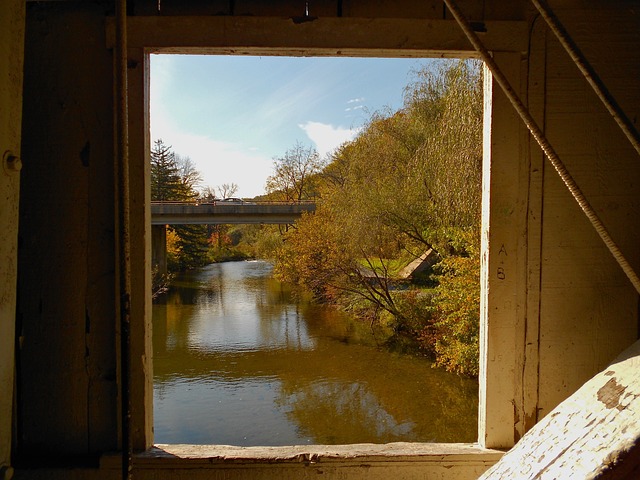
CEMETERIESLocated in a deep bend of the Kiskiminetas river, five miles from its
junction with the Allegheny, Leechburg has all the advantages of geographical
location and scenic beauty. Although this spot had all the necessary
requirements for a townsite, there were but few settlers there before 1821. It
was not until the building of the Pennsylvania canal from 1826 to 1829 that
there were enough people living in the place to entitle it to the name of
village.“Oldtown,” just one mile east, across the Kiskiminetas river, below
Carnahan’s run, and “Jacksonville,” two miles west, each had more
population than the settlement of “Friendship,” as the site of
Leechburg was then called. The first house here, a log one, was located near the
site of the present Grace Lutheran church, back of the lot on which the high
school now stands. It stood near a large spring north of Siberian avenue, near
Spring alley. Addison Leech had the water of this spring piped to his residence
on Market street, the present residence of Hon. Joseph G. Beale. For many years
this spring supplied a large number of the citizens with water; in fact it was
almost a public resort until the waterworks were built in 1891.The site of Leechburg was for the most part patented by White Mattock, an
Indian chief, in August, 1783, while John Vanderen had also patented a parcel of
land part of which Leechburg now occupies Feb. 1O, 1773, ten years before. White
Mattock’s grant consisted of 192-1/2 acres and the main business and residence
portion of Leechburg is on this tract. Among the early owners of Leechburg’s
site was John Walker, to whom this land was surveyed in October, 1773, but he
seemed never to have taken out title papers. Other later owners were William P.
Brady, Jacob Mechling, Frederick Steif, Joseph Hunter, Matthew Shields and David
Leech. The site was later called “White Plains,” and the names of
White Mattock and Matthew Shields appear in most all old deeds, especially those
which came from David and his son Addison Leech. The first two settlers in
Leechburg, as far as any history records, were Joseph Hunter, mentioned above,
and Michael Moorhead, a drover by occupation. They owned cabins near the
“Big Spring.”Leechburg was very prosperous in the past during the building of the old
Pennsylvania canal, and was the headquarters of the promoters and builders of
that famous connecting waterway between the Atlantic ocean and the waters of the
Mississippi valley. This canal west of the Allegheny mountains was supplied
entirely by the waters of the Conemaugh and Kiskiminetas rivers (they being the
same stream under different names), and did more to develop the middle and
western States than any other enterprise before or after. It paved the way for
the construction of the Pennsylvania railroad and supplied a convenient and
cheap means of transporting food and merchandise for the early inhabitants of
the western part of the State.David Leech came to this place in 1827, having the contract to build the
Pennsylvania canal dam, in partnership with a man named Trux. The dam was 36
feet high and 574 feet long, and boats commenced to use the canal in 1829.Leech used the water from this dam to run his flouring and saw mills and a
woolen factory from 1829 to 1832. Thereafter he was engaged in building freight
and passenger boats for use on the canal. His was the second boat to pass
through the canal to Pittsburgh. In all, he had at one time eight boats in
constant use on the canal, until it was superseded by the Pennsylvania railroad,
the railroad company purchasing it from the State.These mills, after David Leech’s death, came into the hands of his son,
Addison, and after him were operated by R. D. Elwood & Bro. The old mill
building is now used by the Leechburg Oil & Paint Co. as a manufactory of
paints and painters’ supplies.In addition to the above-mentioned enterprises the founder of Leechburg was,
soon after he settled here, engaged in the mercantile lines of trade and
together with his sons was afterward extensively engaged in the same business.
He was, from 1853 till 1856, an active member of the firm of Leech, Chamberlain
& Co., engaged in the construction of the Allegheny Valley railroad from
Pittsburgh to Kittanning. His vigorous constitution began to yield to the weight
of years, the numerous cares and responsibilities of his active life and to the
approach of disease, in 1857, and he died November 3, 1858, regretted and
esteemed, at home and abroad.The growth of Leechburg began with the completion of the canal. The first
brick house was built in 1830 by Solomon Moore. It has long since been removed
to give place to a more modern dwelling. Leech was a great builder himself, and
there are several of the substantial brick homes of his construction still in
use. The old Leech residence is still in a fine state of repair.
MUNICIPAL
The borough of Leechburg was incorporated by act of March 22, 1850, and the
first election, held on the first Friday in May of that year, resulted in the
election of David Leech as burgess, and Addison Leech, J. T. Johnston, Jonathan
Hetrick, Wm. R. Garver and Jacob Ulam as councilmen. Alexander Gordon was
elected justice of the peace.The officials of the borough in 1913 are: James B. Smail, burgess; R. E.
Gosser, president of the council; Joseph Stanier, Frank Truxell, W. H. Ashbaugh,
Frank Munshower, James Campbell, councilmen; John A. Hill, clerk; James B. Kifer
and T. Lee Van Geisen, justices of the peace; Lee Bush and A. J. Elliott,
overseers of the poor; C. J. Nieman, treasurer; C. 0. Morris, solicitor; J. H.
Stivenson, constable; J. M. Anderson, assessor.The first separate assessment list of taxables in Leechburg was made in 1832,
viz.: John Brown, lot No. 87, land 125 acres (Martin’s), one head of cattle,
valued or assessed at $833; Joshua Cooper, lots Nos. 78-79, one head of cattle,
$58; Samuel Dickey, one house and lot, one horse, one head of cattle, $223;
George Dupehorn, lots Nos. 83, 96, one head cattle, $108; Daniel Freeze, lot No.
36, one head cattle, $108; John Fee, blacksmith, lot No. 49, one head cattle,
$283; Wm. Hickenlooper, lot No. 117, one head of cattle, $208; Jacob Hill, lot
No. 10, two cattle, $616; David Kuhns, lots Nos. 98-99, two horses, one tanyard,
one head of cattle, $286; Christian Grove, head of cattle, $8; Malcom Leech,
lots Nos. 38 and 31, $225; John R. Long, lot No. 12, one head of cattle, $408;
James McBride, lot No. 84, one head of cattle, $183; William F. Martin, hatter,
$100; Peter Nees, lot No. 3, one head of cattle, $108; Samuel Philliber, lot No.
30, $50; Matthew Taylor, tailor, lots Nos. 69, 101, one head of cattle, $108;
Peter Ulam, cabinet maker, lot No. 11, one head of cattle, $508; Robert Walker,
hatter, $100; Peter Weaver, shoemaker, one head of cattle, $33; David Weaver,
one head of cattle, $8. Total valuation, $1,198.
THE KISKIMINETAS RIVER
Friday, May 18, 1838, was an important date in the history of Leechburg and
of still greater economic importance to the residents of the various towns along
the Kiskiminetas river, for it was successfully demonstrated on this day that
the river was navigable for steamboats. The canal above Freeport having become
obstructed, the captain of the steamer New Castle decided to steam on up the
river. He had on board a large list of passengers and a quantity of freight, and
without a delay or mishap he piloted the vessel right up near to the big dam,
and but for that obstruction would have probably gone as far as Apollo.
Returning the same day, he carried back 150 passengers and a miscellaneous
freight cargo.
FERRIES AND BRIDGES
The first proposed public structure was naturally a bridge. A stock company
with $5,000 capital was organized in 1832, but it was not until 1846 that the
bridge was erected by Hugh Callen. It proved unsafe, was removed and a new one
built, which, however, was carried away by the flood of 1861. Another was built
in 1862 and swept away in March, 1875. The next bridge was built by the
Kiskiminetas Bridge Co., at a cost of $25,000, in 1876. This was afterwards
destroyed by floods and replaced by the present steel bridge in 1889, which was
made free to the public in 1890. In 1907 the bridge was raised above the flood
level and the approaches extended across the railroad tracks to Market street.In 1905 the work of elevating the bridge above the high water line was done
by the railroad, the two counties agreeing to pay $3,000 each for their share,
but as the money was not claimed before 1913 the two counties have refused to
pay the indebtedness, when the bills were presented in the latter year, claiming
exemption under the law of limitation.In 1886 the Pennsylvania Railroad purchased a quantity of land on the
Leechburg side of the Kiskiminetas, built bridges at the upper and lower ends of
the borough and expended $2,500,000 in trackage and station houses and
improvements. The trains ran through Leechburg, crossing the river twice, and
connected at Anderson junction, on the Westmoreland side, with the former
tracks, the tunnel on that side being used for freight trains only.The year of the great Johnstown flood (1889) the upper bridge was carried
away and the railroad was compelled to rebuild in 1901. This bridge was swept
away by flood in March, 1904, and in this same year the grade on the
Westmoreland side was lowered, the tunnel abandoned and the passenger trains
again deserted Leechburg. The piers of the upper bridge are still standing but
there is no prospect of the structure being rebuilt for the third time. The
railroad, however, is preparing to widen and reopen the tunnel by a cut.
MANUFACTURES
A tannery was operated in 1828 by John Taylor on Spring alley and Main
street. Brickmaking was also carried on at irregular intervals here. These were
the only small indutries of the town in early days.The Leechburg Foundry & Machine Co. was built in 1887, destroyed by fire
in 1888 and rebuilt in the following year. The capital of the company was
$100,000 and the officers were: W. A. Cochran, president; George Moesta, vice
president; W. D. Rowan, secretary; R. R. Moore, treasurer. In 1900 the plant was
moved to Homestead, Pa., to be nearer the source of their orders.The Pittsburgh Shovel Co. was founded in 1898, with the following officers:
H. P. Goff, president; W. S. Horner, vice president; L. V. Walsh, treasurer;
George S. Phillips, secretary and general manager; L. W. Walker, superintendent.
The factory is at the western end of the borough and employs 100 men, the
product being shovels, scoops, spades and telegraph linemen’s implements.The Leechburg Flour Mills were established in 1879 by A. J. Elliott, D. B.
Ashbaugh, H. H. Wray, John Young, John Williams and John P. Klingensmith. Here
was made the first roller process flour east of the Mississippi river. The mills
are now being operated by Harry May.The Leechburg Lumber Co. has a fine planing mill and sash factory in the
western end of the town, employing an average of twenty-five men. The manager
and principal owner is P. A. McCracken.
LEECHBURG ROLLING MILLS
The most important industry in the town is the rolling mills, which, under
different managements, have been in almost constant operation since 1872. In
1871 Rogers & Burchfield purchased the land on which the works now stand,
and in 1872 the mills were built. The plant consisted of six single puddling
furnaces, two knobbling fires, one refiner’s fire, six heating furnaces, four
sheet heating furnaces, three annealing furnaces, two pairs of muck rolls, two
pairs of sheet rolls, two pairs of tin rolls, two pairs of cold rolls, one pair
of muck shears, two pairs of sheet shears, one blast cylinder with engine
complete, five cylinder boilers and one Allen engine of about 350 horsepower.
The quantity of finished iron made per month was two hundred and fifty tons the
quality of which was equal to the Juniata charcoal iron and number one for
stamping. All the other was equal to the best brands of sheet iron. The tin
works, consisting of three stacks, were built in 1874. Their daily product was
ninety boxes of excellent tin. The number employed in the manufacture of iron
and tin was one hundred and fifty. They were suddenly thrown out of employment
by the suspension of these works September 19, 1875.Rogers & Burchfield, who also owned the works at Apollo, had strained
their financial resources by the building of the Leechburg mill and the purchase
of other property, and were unable to stem the panic of 1874, although they held
out for a year, and were forced to make an assignment, Reuben Miller, Jr., of
Pittsburgh being appointed assignee.This failure of their chief source of income almost paralyzed the inhabitants
of the town, which had just taken a new lease of life and grown from a village
of 350 souls to a bustling trade center of 1,500. Although a new town, filled
with enterprising citizens, the smaller business houses had not increased
abnormally, and for a town with such a seemingly bright future the trade was not
overdone and was to a large extent in conservative hands, so there were but few
failures among local merchants and they faced the storm most heroically. Some of
the skilled workmen went to the newly established tin mills at McKeesport, for
Leechburg had been the first plant in the United States to make tin. Others went
back to the coal mines which they had left for the seemingly more desirable work
in the mills; and many returned to their farms or hired out as laborers. Most of
the workmen were from England and Wales, and had never known other than the iron
or tin trade, and to these strangers in a strange land the situation was dark
indeed.This failure was most disastrous to the members of the firm themselves, quite
a numher of local business men suffered severely by the suspension, and the loss
in business could not be estimated. Mr. Rogers, only a year before, had gone to
Russia to try to secure the secret of making “Russian” or planished
iron and the result was such that he secured valuable patents which were after
the failure bought at assignees’ sale by DeWees, Wood & Co., of McKeesport,
who also re-employed many of the idle workmen.The DeWees Wood Company had attempted previously to manufacture planished
iron, but had never been very successful, but after the purchase of the Rogers
& Burchfield Company’s patents they successfully produced a good quality of
planished iron, under their old and newly purchased patents.A fortunate thing for the working people of the town during the panic of 1873
was the fact that the Leechburg Colliery, then being operated by the late D. B.
Ashbaugh, was running on full time and readily employed much surplus help that
the mills had thrown out of work. This proved not only a boon at this time, but
during the entire twenty-five years of its activity was one of the best assets
of the town, although the mines were situated half a mile away, across the
Kiskiminetas river. During the first twenty years these mines employed American
labor almost exclusively, and a large number of the employes owned their own
homes, paid for out of their earnings.The iron manufactured had proved especially valuable for stamping and coating
for the now famous graniteware which was then just coming into favor, having but
recently been discovered. The St. Louis Stamping Company were among the largest
buyers of this charcoal brand, and they had been greatly disappointed by the
failure, as their business suffered for want of the material which they had so
thoroughly tried out. The result was that when the plant was again put into
operation they were among its first customers and sent an expert on, keeping him
here several weeks testing the new output, which again proved satisfactory.
Thus, through the agency of this and other stamping companies, Leechburg iron
has been a household article in almost every home in America and its jingle can
be heard in the kitchen of the lowly or the pantry of the more affluent.The firm fortunately resumed activities at a most opportune time, as in less
than a year from their start the business of the country began to recover from
the effects of the panic and a most prosperous era in the iron business set in,
sheets advancing from 3-1/4 cents a pound to 7 cents within a few months, and
the firm having quite a supply of raw material in pig-iron, blooms, etc., on
hand, their profits were, for a time, something beyond their fondest dreams.Coal was first used under the furnaces, but as stated in 1874 gas was
substituted with success, the first use of this clean fuel in the United States.
The wells were just across the Kiskiminetas river, and had been drilled by Major
Beale in 1869. A line of pipe was run across the river and under the boilers,
the pressure being reduced by a crude regulator devised for the occasion, and
the gas was lit by John Cole, the superintendent, who used a long pole with a
torch on the end, fearing an explosion. The success of this experiment induced
William Rogers to try the gas under the furnaces, and again success rewarded his
enterprise. William B. Jack was the first man to apply the gas to boiler heating
and James Saulters first adapted it to heating the puddling furnaces in the
mill. Since the first use of gas here the works have been constantly consuming
it under the furnaces, although considerable coal is now used also. The gas is
much cheaper than coal, and being free from sulphur makes a much better quality
of iron than can be made with bituminous coal. It was at first used for
illuminating the town at night, which was done by means of a perpendicular
gas-pipe extending upward sixty-five feet, more or less, near the rolling mill,
from the top of which jets of burning gas made a large and brilliant flame,
whose light was visible a great distance. That gas well was developed in 1869 by
an oil company, composed largely, if not entirely, of citizens of Leechburg, who
drilled for oil, having been induced to do so by the knowledge of the sandrocks
and other strata which they gained from the geological articles written by
Robert W. Smith, the historian, that had previously appeared in the Union Free
Press. The depth to which that well was drilled is 1,250 feet, and that of the
gas sand about 1,200 feet from the surface.In the fall of 1876 the assignee of Rogers & Burchfield advertised the
mill for sale and on the day named a number of prominent iron manufacturers were
on hand and everything looked favorable for the starting of the wheels of
industry. The property consisted at that time of the sheet mills and tin mills,
puddling and knobbling furnaces and the new plant for the manufacturing of tin,
together with 250 acres of farm land, most of which was underlaid with coal and
was available for town lots, as it adjoined the town and was in fact mostly
within the borough limits. The plant had cost, at the prices prevailing at that
time, about $225,000. When bidding commenced it was soon seen that no such
figures would be realized and after fairly brisk competition the mill was sold
for $70,000 to a man named Criswell, who was bidding for himself and Rogers, and
hoped to be able to reorganize the company for the old stockholders and thus
retrieve their losses. He failed, however, to produce the cash and the property
was again advertised a few weeks later.A new company had meanwhile been organized by Major Joseph G. Beale, and when
the plant was again put up at auction it was bid in for $77,000 by J. G. Beale,
J. C. Kirkpatrick and J. C. Wallace, of Pittsburgh, under the firm name of
Kirkpatrick, Beale & Co.After many repairs and improvements, the plant again resumed operation,
scores of the old employes returned to work and the town again resumed its
prosperous appearance. From this date to the present time the mills have run
with but little interruption, although changing hands several times. In 1900 the
plant was sold to the Pennsylvania Steel Co., which was later incorporated in
the United States Steel Corporation. The works are now operated under the name
of the American Sheet & Tin Plate Company, and produce the finest grades of
sheet steel.The West Pennsylvania Steel Works were built in 1879 by Major Beale, and were
the finest equipped in the country at the time, being the first steel plant in
the United States to be operated entirely by American employees. It was later
absorbed by the United States Steel Corporation, the machinery removed and the
site sold.Mr. Beale had at first built only an open hearth steel furnace for producing
blooms or billets and it was the first outside the Edgar Thompson plants built
in the State, he paying $10,000 cash for permission to use the process, which
was patented. When he later built the sheet mills as stated above he took in as
partner B. F. Jennings, the firm being Jennings, Beale & Co. As stated this
mill was later operated as the West Penn Steel Works and absorbed by the trust
in 1900, wrecked and moved away.Leechburg has furnished more managers, superintendents and promoters of sheet
steel mills and steel furnaces than any town of ten times its size anywhere in
the United States. The present manager of the American Sheet Steel & Tin
Plate Company in the Kiskiminetas Valley, Addison H. Beale, who has charge of
the thirty-eight mills at Vandergrift, eleven mills in Leechburg, five mills in
Hyde Park and six mills in Saltsburg, is a son of Hon. Joseph G. Beale, of
Leechburg, and first worked in his father’s mill in this place. William Bonfield,
of Follansbee, W. Va., learned the business in Leechburg mills, where he was
later superintendent, and still later manager and owner at Irondale, Ohio, of
the sheet mill. John McGinley, large owner and manager of the West Penn Steel
Company, Brackenridge, learned the business here. Harry Sheldon and Lester W.
Walker, of the Allegheny Steel Company, and Elmer Hicks, of the same company,
managers and superintendents, Tarentum, Pa., were from Leechburg, as were Elmer
Cline, of the Canton (Ohio) Rolling Mills, and Edward Sohr, of the same company,
superintendent and manager. Oliver Bardman, of the Chester (W. Va.) Mills,
Robert Lock, superintendent, manager and large owner of the Apollo (Pa.) Steel
Company, Charles Moesta, owner and manager of the Moesta Machine Company,
Homestead Pa., were from here. We could name twenty other prominent owners and
superintendents from Leechburg originally, but will mention only J. E. Conohon,
of Canton, Ohio, who built the Canton Sheet & Tin Plate Company. Captain
Hicks is also a large mill owner as well as manager and part owner of twenty
coal companies, the offices of fifteen being in Leechburg. John W. Kirkpatrick
and Daniel M. Campbell are large owners in the West Leechburg Steel Company,
employing 750 men, and both these are Leechburg men. This gives a slight idea of
the importance of Leechburg as an educator in the business and manufacturing
world.
WATER AND FIRE PROTECTION
Leechburg is well provided with an abundant supply of the best water in the
country, from the Leechburg Water Co. reservoirs at Beaver run, in Westmoreland
county. The pressure is ample to throw a stream over the tallest building.A disastrous fire visited the town in the winter of 1889, and this moved the
citizens to organize the volunteer fire company, now consisting of sixty-five
active and thirty honorary members. The officers at present are: H. E. Bruce,
president; J. D. Van Tassel, first vice-president; S. R. Saunders, second
vice-president; M. F. Findley, secretary; James Saulters, treasurer; H. R.
Thomas, chief; J. M. Stanier, first assistant; J. H. May, second assistant.The fire fighting outfit in 1913 consisted of two hose trucks and two hook
and ladder trucks of old design, but quite effective in use. A new auto truck
will shortly be purchased. The borough building has been fitted up as a club
room for the members of the company. There they have a fine room with the lower
story for hose house. They also have hose house No. 2, in the northern part of
the town.
PUBLIC BUILDINGS
Seeing the need for a first class hotel, Josiah Klingensmith in 1901 built a
handsome three story building in the center of the town, at a cost of $40,000,
the lower floors being designed in part for stores. The hotel has been named the
“Twaddle.” Since 1911 the lessee has been A. A. Gales. Another hotel,
the “Graham,” is conducted by D. T. Graham.The present handsome Grand Opera House was built in 1908 by a stock company,
headed by Dr. J. D. Orr, at a cost of $47,000. The need of a building for
lecture purposes by the Leechburg Lecture Association was the primary reason for
the erection of this playhouse. It is the most complete and handsome theatre in
the county. There are also two moving picture houses in the town. The post
office is in the opera house building, together with store rooms, Masonic hall
and the offices of the Armstrong Coal Company.The borough building was erected in 1893 and is used by the town officials
and the Leechburg Volunteer Fire Company as a meeting place. The hose and ladder
trucks are housed in the first floor, and there are also three store rooms.
BANKS
The First National Bank of Leechburg was chartered in 1900 with a capital of
$50,000. In 1913 it is one of the few “Roll of Honor” banks in the
United States, with a surplus and profits in excess of its capitalization. The
officers are: Alfred Hicks, president; J. R. Long, first vice-president; Joseph
Kepple, second vice-president; C. J. Nieman, cashier. The additional directors
are: N.H. Slonaker, L. W. Hicks, James B. Smail, Josiah Klingensmith and Daniel
Gosser.The Farmers’ National Bank was chartered in 1908, with a capital of $50,000.
The officers are: D. M. Campbell, president; J. D. Flude, first vice-president;
P. A. McCracken, second vice-president; C. F. Armstrong, cashier; James W.
Saulters, assistant cashier. These officers, with the addition of H. R.
Sheffield, W. M. Swank, H. S. Zimmerman, S. R. Saunders, J. H. Parks, A. H.
Beale and G. A. Hunger, form the board of directors.
MERCANTILE AND OTHER OCCUPATIONS
There were, according to the mercantile appraiser’s list, of 1880, eighteen
stores, of which seventeen were in fourteenth and one in the thirteenth class.
Under this head are included drug stores, groceries and merchant tailor
establishments.Following is a list of the principal mercantile establishments of Leechburg
in 1913: Druggists – Frederick T. Butler, J. H. Parks & Son, M. Brechbill.
Dry goods, clothing, shoes – J. A. McKallip, Stull-Hill-Coulter Co., L. N. Bush,
Fiscus Bros., Sutton & Flude, Van T. Shepler Co., Long’s Department Store,
J. J. Long. Tailors – D. J. Fogel, C. R. Teeters, J. E. Anderson. Clothing,
furnishings – Morris Liptz, Gusky & Bennett, L. N. Bush. Shoes – Frank
Truxell. Jewelers – R. A. Cunningham, E. Willkow, J. F. Stoops. Crockery – J. A.
Boyd. Furniture – Armstrong Furniture Co., Leechburg Furniture Co. Millinery –
Miss Nell Doran, Miss Edythe Harvey. Confectioner – J. E. McDowell. Hardware –
Smail & Hill Co., Hill Hardware Co., J. C. McGeary & Son, Leechburg
Hardware Co. Ltd. Variety stores – J. C. Nolf, J. A. Boyd, Bright & Clark,
J. Porgis, W. B. Miller. Grocers – A. C. Rose, Stull-Hill-Coulter Co., D. Gosser
& Son, Aaron Ginzler, Fiscus Bros., Mrs. William Bucholz, Maridon Bros.
Baker – F. P. Goryews. Real Estate – Leechburg Realty Co., Howard Thomas, W. B.
Ryan & Co., T. L. Van Geisen. Newsdealers – Kifer & Bolar. Barbers –
Raymond & Ross, A. E. Boucher. Pool parlors – C. A. Reeves, Culp &
Anderson. Harness – A. 0. Kinter. Fruit – Joseph Catalano, Martin Martininsko.
Restaurants – Long’s, Cosey, Keystone. Livery – Leechburg Livery Co., J. A.
Kirk. Butchers – Andrew Lewis, H. A. Cook, J. E. Knepschield & Son, A.
Ginzler, Maridon Bros. Undertakers – C. A. Logan and J. M. and A. M. Armstrong.
ELECTRIC LIGHT
The Leechburg Electric Lighting Co. was organized in 1899 and operated until
absorbed by the Leechburg & Apollo Electric Railways Co. in 1902. The
borough is now supplied with light and power by the West Penn Electric Co., of
Connellsville, Pennsylvania.
POSTAL
The Leechburg postoffice was established in 1829, with David Leech as the
official in charge. A long line of postmasters has followed him, the last two
being N. K. Collier and John G. Duncan. I. P. Kerr, appointed by Abraham
Lincoln, was postmaster for thirty years.Since the installation of the rural routes the postoffice here has been
greatly enlarged to accommodate the increase of business. Three of the rural
routes center here in 1913, as well as one Star route.
POPULATION
The population of Leechburg in 1850 was 359; in 1870, 368; in 1880, 1,123;
1890, 1,921; in 1900, 2,459; in 1910, 3,624.The assessment returns for 1913 show: Number acres, 37, value $4,455; houses
and lots, 747, valued at $531,070, average, $732.93; horses, 141, valued at,
$6,015, average, $42.80; cows, 4, valued at, $80, average, $20; taxable
occupations, 1,082, amount, $54,817; total valuation, $673,367. Money at
interest, $101,827.79.
NEWSPAPERS
The Leechburg Enterprise was established in 1873 by J. T. Robertson, who
retained ownership until 1875, when it was purchased by H. H. Wray, who sold out
in 1880 to Charles A. Hill. The next owners were H. L. Gorman and John M.
Schwalm, the latter changing the name to Albatross. From 1887 to 1901 the paper
was held by Edward Hill and D. K. Hill, and after that time came into the hands
of the present editor, H. H. Wray. The name has been Leechburg Advance since
1885. It is a six-column, eight-page paper, all home print, and independent,
with a circulation of 1,700.
FIRST PRESBYTERIAN CHURCH
The first Presbyterian families in this section had their membership at
Freeport until 1843, when a subscription was taken to support Rev. Samuel
Caldwell for part of his time here. The congregation organized in 1844, with
John Christy, William James and James Paul as ruling elders. The first members
were: Alexander Gordon, Sarah E. Gordon, William Moore, Mary Moore, Margaret
Anderson, Elizabeth Bole, Mary Klingensmith, Hannah Metzler, Joshua Cooper, Sara
Ann Cooper, Eliza Wingard, Anna Hawk. On a lot given by David Leech the first
church was erected in 1851, at an expense of $1,500. This being too small in
1882, the present building was put up at a cost of $12,600. Since that date it
has been improved and repaired frequently. The supplies of this congregation
were: Revs. Levi M. Graves, Thomas Black, Watson Hughes, William F. Kean and
Andrew McElwain, until 1850. After that date the pastors have been: Revs. Thomas
S. Leason, 1850-58; James E. Caruthers, 1859-70; David H. Sloan, 1871-96; J. S.
Helm, 1896-1913. Membership in 1913, 316; Sabbath school, 218. The
superintendent of the Sunday school is Mr. Sydney J. McCabe.
HEBRON EVANGELICAL LUTHERAN CHURCH
One of the earliest denominations in Leechburg was the Lutheran. Before the
town’s incorporation services were held by Revs. Michael Steck, Adam Mohler and
Jacob Zimmerman. In 1844 the Hebron Evangelical Lutheran Church was organized
and in 1845 the first brick building put up at a cost of $1,500, on the north
side of Back street, directly in the center of what is now Second street. It was
dedicated in 1845. The pastors were: Revs. David Earhart, Louis M. Kuhns and
Jonathan Sarver, until 1868. The first trustees were George Kepple, Jacob Trout,
Thomas Van Tine, Abraham Heckman, Andrew Ashbaugh and Samuel Shuster. A division
of the congregation occurred in 1868, which attracted nation-wide attention, and
on the settlement of the case by the courts rested the fate of every Lutheran
church in the two ruling bodies – the General Synod and the General Council. The
adherents of the General Synod retained the original church building and the
Rev. Jonathan Sarver organized the remainder into a separate congregation. After
the separation the pastors were: Revs. Francis T. Hoover, Lewis Hay, John W.
Poffinberger, J. C. N. Park, Geo. M. Heindel, D. D., and the present pastor,
Rev. Edward E. Blint, D. D. The present fine brick building was erected in 1887,
on the corner of Second and Main streets, the removal of the old building
permitting the opening of Second street. The cost of the building was $50,000,
and the organ, one of the largest in the State, cost $4,000. The church now owns
the parsonage and another building adjoining, to be later used for necessary
expansion, all free of debt. This church has been the meeting place of the
Pittsburgh Synod during the years 1847, ’58, ’79, ’88, ’94, 1900, ’02, ’03, and
’13.The church council in 1913 is composed of Rev. Edward E. Blint, D. D.,
president; N. H. Slonaker, secretary; John A. Hill, treasurer; W. H. Ashbaugh,
financial secretary; John A. Hill and John B. Sober, elders; R. E. Gosser, W. H.
Ashbaugh, N. H. Slonaker and Welty S. King, deacons. The annual congregational
meetings are presided over by Dr. J. D. Orr, president, and Lewis A. Hill,
secretary.The present church membership is over 600, the largest in the history of the
congregation. The Sunday school, of which John A. Hill is superintendent, is
attended by 350 members and children.From this church in the past have gone forth two ministers, Revs. Braden
Shaner and John J. Hill, and another is now completing his theological course,
Frank E. Smith.The deaconesses who have graduated from this church are: Sister Elizabeth
Knepshield, St. John’s Church, Des Moines, Iowa; Sister Edna Hill, St. Paul’s
Church, York, Pennsylvania.For benevolent purposes last year this church contributed the sum of $1,788,
and all purposes, $5,498.
FIRST LUTHERAN CHURCH
The First Lutheran Church was organized in 1868 by Rev. Jonathan Sarver, who
donated the lot on which the present edifice is standing. The first building was
of brick and cost $5,000, being built in 1872. Rev. Sarver resigned in 1883 and
sold the parsonage to the congregation. He was followed by Rev. W. T. Miller, D.
D., 1883-93; Rev. E. F. Krauss, D. D., 1893-1900; Rev. M. L. Zweizig, 1901-09.
The present pastor is Rev. Frederick A. Reiter, who came Sept. 26, 1909. The
present beautiful and modern church building was erected in 1909-10. It is of
brown limestone, elegantly furnished, heated and lighted and is one of the
finest in this part of the State. The chimes in the tower can be heard each
Saturday eve and Sabbath, and are the pride of the residents of this quiet and
picturesque town. Their clear, melodious tones roll over the lovely valley of
the Kiskiminetas like a benediction and incline the hearer to a deeper reverence
for the blessings of religion. The entire cost of the church, chimes and the
modern and homelike parsonage adjoining was over $63,000. The church membership
is 500 and the Sabbath school has an enrollment of 350. At the end of 1913 the
collections for missions and other purposes amounted to over $1,400. Mrs. Flora
Stivenson was the first contributor to the fund for chimes and is called
“The Mother of the Chimes.” She died this year, 1913.
THE METHODISTS
Up to 1830 the Methodists of Leechburg were served by itinerant preachers who
came through on their tours of this county. The names of these pioneers are not
all at hand, but among them were: Revs. Thomas McGrath, John Somerville, Simon
Elliott, David P. Hawkins, James Henderson, M. L. Weakley, Israel Dallas, D. P.
Mitchell.Under the direction of Rev. F. S. DeHass the small congregation organized in
1830, and in 1846 a brick church was built on the site of the present church, on
land donated by David Leech. Rev. DeHass was afterward appointed U. S. consul to
Jerusalem.From the last date the pastors were: Revs. H. S. Nesbitt, E. B. Griffin,
Daniel A. Hines, Hiram Miller, Jack Lane, James R. Means, J. S. Bracken, J.
Shaw, H. Borbage, W. P. Blackburn, Isaac Sadler, Theo. Coleman, William Steward,
Wampler Mutersbaugh, Heaton, P. F. Jones, A. Scott Ray, Richard Jordan, Simpson,
John Wakefield, Joseph Shaw, A. P. Leonard, John S. Lemmon.Between 1866 and 1867 the old brick church, which had become unsafe, was
replaced by a frame building, 35×45, which in turn was replaced by the present
edifice in 1887. The old frame was torn down and the new church, of brick, cost
about $17,000. The trustees at the time of erection were: Joseph C. DeWitt, J.
H. Fiscus, Israel Klingensmith, Aaron Hill, W. B. Jack, Andrew Grinder and
Cornelius McCauley.Succeeding pastors were: Revs. William Dallas, M. M. Eaton, E. B. Webster,
Henry C. Beacon, J. F. Core, N. Davis, Thos. J. Kurtz, George Orbin, J. B. Risk,
W. F. Conner, C. W. Miller.After 1875 the Leechburg circuit was abolished and the charge was made a
station. The subsequent pastors were: Revs. Jas. M. Swan, J. W. McIntyre, H. H.
Pershing, B. Pugh, E. G. Loughry, until 1886.To the earnest efforts and care of Rev. Loughry we are indebted for this
complete record of Methodism in Leechburg. He devoted much time to gathering the
data and entering it in the church records. After a life of good works and
regretted by hundreds he passed away this year (1913) in Pittsburgh. His
pastorate at Leechburg lasted five years.The pastors from that date to 1913 were: Revs. J. B. Uber, 0. A. Emerson,
Thomas Patterson, Calvin Miller, P. C. Brooks, N. L. Brown, William Tannehill,
Thomas Hicks and the present popular incumbent, Rev. Thomas Charlesworth.The present church building is in fine condition and has a large auditorium
and Sunday school. The Ladies’ Aid Society, which is still in a thriving
condition, assisted at the erection of the church in 1887, raising $1,600 toward
its cost.In 1889 the membership was 123; in 1890 it was 257; and in 1913 it was 445.
The Sunday school has a membership of 338.The conference of the Methodist Church of the Pittsburgh district was held in
Leechburg in 1904.
HOLY INNOCENTS EPISCOPAL CHURCH
There is a tradition that some services of the Episcopal Church were held in
Leechburg as early as 1857-58 (but nothing permanent) by a Rev. Mr. Hopkins.In 1885 the General Missionary of the Diocese of Pittsburgh, Rev. Samuel P.
Kelly, visited the town and found a former communicant of St. Paul’s Church,
Kittanning, resident in Leechburg, Mrs. Mary Weiser, with two young daughters
(twins) whom she had taught to pray for the establishment of their beloved
church in the place. There were also about twenty other Episcopalians resident
here. So a mission was begun under the name of “The Holy Innocents,”
and Mr. George A. McKallip Dyess was appointed lay reader. A chapter of the
“Guild of the Good Shepherd” was organized of which the officers were
Miss L. M. Eckman and Mrs. Weiser.The Bishop of Pittsburgh made his first visitation of the mission on July
2nd, 1885, held service in the Baptist Church, and confirmed one person.Since that date he has administered confirmation in Leechburg a score of
times, and has confirmed one hundred and thirteen candidates.Since that time Rev. S. P. Kelly, other general missionaries and local
ministers (sometimes resident), have had charge of the work, including the Revs.
Charles A. Bragdon, J. H. Barnard, George Gunnell, William Coney, John King,
Joseph Baker, A. S. Lewis, Thomas Lloyd, A. W. Kierulff, C. E. Ball, and G. A.
M. Dyess, Ph. D.A frame church was built and opened December 26, 1889. This was burned down
in 1904, and another of brick was erected and opened for service June 22, 1905,
consecrated November 5, 1913.There have been since 1905 many removals and losses, and the present number
of communicants is only forty-eight.
UNITED PRESBYTERIAN CHURCH
The First United Presbyterian Church of Leechburg was organized in 1884 with
15 members, yet within that year they succeeded in erecting a $4,000 brick
church. The first pastor was Rev. James Dodds. He was succeeded by Rev. J. A.
Browning. Rev. E. Z. Thomas, D. D., took charge in 1881, and during his
pastorate to the present year (1913) repairs and additions to the amount of
$2,000 have been made to the church and the membership increased to 206. The
Sunday school numbers 140. A new parsonage is being erected.
THE BAPTISTS
The First Baptist Church was organized in 1873, and that year a frame
building erected on the southwest corner of Third street and Siberian avenue. It
is of a Gothic design and measures 40×40 feet. This church has been repaired and
remodeled in 1913, the re-dedication services being held by Rev. Harry Bambridge,
president of the Pittsburgh Baptist Association. An address was also delivered
by Rev. H. G. Gleiss of Pittsburgh. Rev. Thomas Lambert, of Scotland, has
accepted a call to fill the pulpit during the coming year.
HUNGARIAN PRESBYTERIANS
The Videke Reformatus Egyhaz, or Hungarian Presbyterian Church, was organized
May 6, 1911, with a membership of twenty-seven, under the care of the Presbytery
of Kittanning. For a time services were held in the Presbyterian Church in
Leechburg, but the increase of membership enabled the congregation to erect a
handsome brick building in the suburbs, the cost of which was $5,000. This
church was occupied on Christmas day, 1913. The dedication was postponed to May
30, 1914.In connection with the church is a thriving Sunday school of thirty-four
members, and a men’s Bible class of twenty-three members.The pastor, Rev. A. W. Kovacs, has been the father of his congregation from
the first, and has expended his entire time in the upbuilding of the
organization, even putting his hands to the labor of erecting the building. His
services are held in the Magyar language and he is frequently called upon to
address meetings of six nationalities in their native tongues. Rev. J. S. Helm,
D. D., assisted largeley in organizing this congregation.
ROMAN CATHOLICS
St. Catherine’s Roman Catholic Church of Leechburg was established about 1872
and the membership has fluctuated since that date in proportion to the
prosperity of the town. The present membership is quite large and is composed
largely of the English speaking citizens of that denomination. They have a neat
frame building in the upper part of the town with a handsome new brick parsonage
opposite. Rev. F. A. Maloney has been in charge of the congregation for the past
two years.St. Martha’s Roman Catholic Church of Leechburg has the unique privilege of
administering to both the Greeks and Roman Catholics of the parish. Rev. Stephen
Ulrich, the pastor, can converse with any member of the congregation, which
includes Slovak, Magyar, Polish, Lithuanian, German and Italian nationalities.
There are 100 families in the parish and they worship in a $2,000 frame edifice
which they erected in 1910. The first Mass was said on September 22, of that
year. They have also a $10,000 lot and parsonage.
GRACE LUTHERAN
Grace Lutheran Church is another offshoot of the Hebron congregation,
organized in 1900. They have a frame church on Siberian avenue just above the
latter. The present pastor is Rev. T. A. Himes; D. D. Rev. J. C. N. Park was the
first minister, and was followed by Rev. John Tressler and Rev. William Hesse,
D.D.
FREE METHODISTS
The Free Methodist congregation is supplied by Rev. S. W. Ayers, who also
serves the congregation at Bagdad. They have a neat frame house of worship.
Their congregation is small.
LEECHBURG INSTITUTE AND ACADEMIES
The first session of the Leechburg Institute for both sexes was opened in
April, 1853. Chiefly instrumental in founding the school were: Daniel Zimmerman,
Rev. Jacob Zimmerman, Robert Thorn, Rev. David McKee, Mrs. Fitzgerald, William
R. Trout. The first principal was A. S. Thorn, who remained in charge until 1854
and was followed by Rev. David McKee, who continued until 1862. For several
years the sessions were held in an old log building belonging to Mrs.
Fitzgerald, still standing in Westmoreland county, half a mile southwest of
Leechburg, near Weinels Cross Roads. In 1858 a building was erected in
Leechburg, in which the school was housed until 1862, when it was sold to the
Presbyterian Church, and was named the Leechburg Academy. Later on this building
was used as a boarding house by Mrs. Elizabeth Stitt, as it was the best adapted
to that purpose in the then small town. It is notable that in 1861 fourteen
students became soldiers in the first call for volunteers for the preservation
of the Union. The old building was sold in 1873 for $1,000 to J. H. Bergman, who
converted it into a dwelling house. Finally in 1878 the old institute was
burned.Up to 1864 the school was jointly conducted by the Presbyterians and the
Lutherans. In that year the Lutherans incorporated the Lutheran Academy. A
three-story edifice, with a cupola and containing six school rooms, was built on
the site of the Hebron church, which later took its place. This academy
prospered for some years, Professor McKee continuing as the principal until
1867. Among the instructors were Revs. David M. Kemmerrer, Samuel F.
Breckenridge, and others. After the controversy in the Lutheran Church this
institution languished and in 1869 was closed.The Presbyterians continued their school for several years under the
direction of Miss Martha Foley, Dr. T. A. McCurdy, S. A. McClung, Rev. Virgil
Shirley, Rev. George W. Riggle, J. G. D. Findley, Rev. W. J. Bollman. With the
charge of Rev. T. B. Anderson in 1869 the school ceased to exist.
SCHOOLS
The first school building in Leechburg stood on the south side of Main
street, at the corner of Bridge alley. It was afterward used as a dwelling and
moved across the street, where it now stands. The present school house was built
in 1874 and is still in a fine condition, but will soon be too crowded by the
children of this rapidly growing town.The Leechburg High School was erected in 1910, and is a handsome two-story
buff brick building of modern design, valued at $22,000. S. M. Neagley is the
supervising principal and his assistants are: Eliza McMullen, department of
mathematics; Carrie Smith, Latin and history; Myrtle Foale, English; William
McIhattan, sciences; Amabelle Watson, music.In 1869 there was one school; number of months taught, 5; female teacher, 1;
salary per month, $28; male scholars, 19; female scholars, 12; average number
attending school, 23; cost per month, $1.16, amount tax levied for school and
building purposes, $177.28; received from tax collectors and other sources,
$218.28; from State appropriation, $8.50; cost of instruction, $140; fuel and
contingencies, $30.25; cost of schoolhouse, $39.83; balance on hand, $8.23.In 1870 there was one school; number months taught, 4; one female teacher;
salary per month, $28; male scholars, 8; female scholars, 14; average
attendance, 19; cost per month, $1.48; received from State appropriation, $8.16;
from taxes and other sources, $164.98; total, $173.14; cost schoolhouse, etc.,
$24; paid for teacher’s wages, $112; for fuel, contingencies, etc., $18.30;
resources, $10.68.The number of rooms in 1913 was 18; average months taught, 9; male teachers,
2; female teachers, 18; average salaries, male $138, female, $56; male scholars,
362; female scholars, 394, average attendance, 623; cost per month, $2.02; tax
levied, $15,611.76; received from State, $3,088.44; other sources, $21,261.74;
value of schoolhouses, $81,000; teachers’ wages, $11,904; fuel, repairs, etc.,
$12,564.71.The school directors are: J. D. Orr, president; A. B. Walker, secretary; C.
F. Armstrong, treasurer; C. S. Hill, A. M. Armstrong.
SOCIETIES
Leechburg is supplied with several lodges, some of them existing since the
early settlement and others of the more modern secret orders.The Masonic order was established here in 1889, and has a very large
membership, including the Shriners. Present organizations are: Leechburg Lodge,
No. 577, F. & A. M.; Orient Chapter, No. 247, R. A. M.The Odd Fellows were organized here in 1869 and now have a fine membership.
The present lodge is No. 437. They own their building, a three-story brick on
Market street, with offices on the ground floor. Number of members, 208.The Knights of Pythias were instituted here in 1871. The membership now is
160.The B. P. 0. E. have a fine home of their own on Market and Second streets
and a membership of 200. The number of the lodge is 37.Eyrie No. 1910, Fraternal Order of Eagles, has a membership of 125.
The Loyal Order of Moose, Lodge No. 102, have a home in the town, and a
membership of nearly 200.The Fraternal Order of Owls has 250 members.
John A. Hunter Post, No. 123, Grand Army of the Republic, is composed of most
of the surviving veterans of the Civil war, but its membership is becoming
smaller each year, as the old soldiers pass way.The William Marconi Lodge, No. 1, is an organization of Italians named after
the inventor of wireless telegraphy and is the first organized in the United
States. It has over 200 active members.The Minetora is another foreign society, with 250 members, and the Magyar
Hungarian Society, with 125 members.
MEDICAL
The first physician in Leechburg was Dr. George W. Marchand. Others resident
here at different periods were: J. P. Pullard, William Wilson, J. Kiers, John T.
Crawford, T. C. McCulloch, Washington Reynolds, W. L. Morrow, R. P. Hunter, J.
A. Armstrong and J. A. Carson. The present ones are: U. 0. Heilman, Joseph I.
Hunter, Joseph D. Orr, Clarence C. Parks, David H. Riffer and Howard M. Welsh,
V. E. Van Kirk.
CEMETERIES
The old Leechburg cemetery is located northwest of the town, on a commanding
hill. The Leechburg Cemetery Company was incorporated in 1864. Evergreen
cemetery was laid out in 1888, with all the skill that modern landscape
engineers could exert. The main roadways have been been worked out to advantage
and many beautiful and massive monuments bear witness to the respect in which
the dead who sleep here were held by their surviving families and friends.Part of this cemetery has been made into a parkland and set aside as a
perpetual memorial to the soldiers of the various wars who were natives of this
and near communities. Here is a duplicate of the George B. Meade monument at
Gettysburg, and a large cannon, a donation from the War Department, mounted,
near the center of the park. This park is under the care of the Soldiers’
Memorial Association, an organization of the citizens of Leechburg and
surrounding territory.The cemetery of St. Catherine’s Roman Catholic Church is near here, having
been chartered and laid out in 1897. It is a peaceful and beautiful “Campo
Santo,” or rest of the saints. Pleasant Hill cemetery is also located near
here on a hill overlooking the town and is a very beautiful burial place.Source: Page(s) 135-146, Armstrong County, Pa., Her People, Past and Present,
J. H. Beers & Co., 19114.
Transcribed September 1999 by Sara Stewart for the Armstrong County Smith
Project.
Contributed by Sara Stewart for use by the Armstrong County Genealogy Project
(http://www.pa-roots.com/armstrong/)Armstrong County Genealogy Project Notice:
These electronic pages cannot be reproduced in any format, for any presentation,
without prior written permission.Return to the Beers Project
Return to the
Armstrong County Genealogy Project
Return to the
Armstrong County Genealogy Project
Return to the
Armstrong County Genealogy Project
(c) Armstrong County
Genealogy Project
About Author
